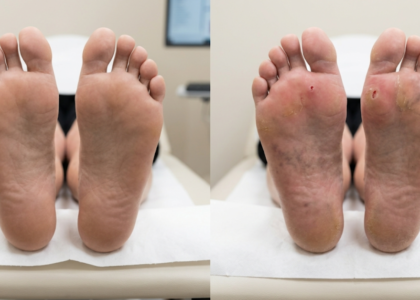

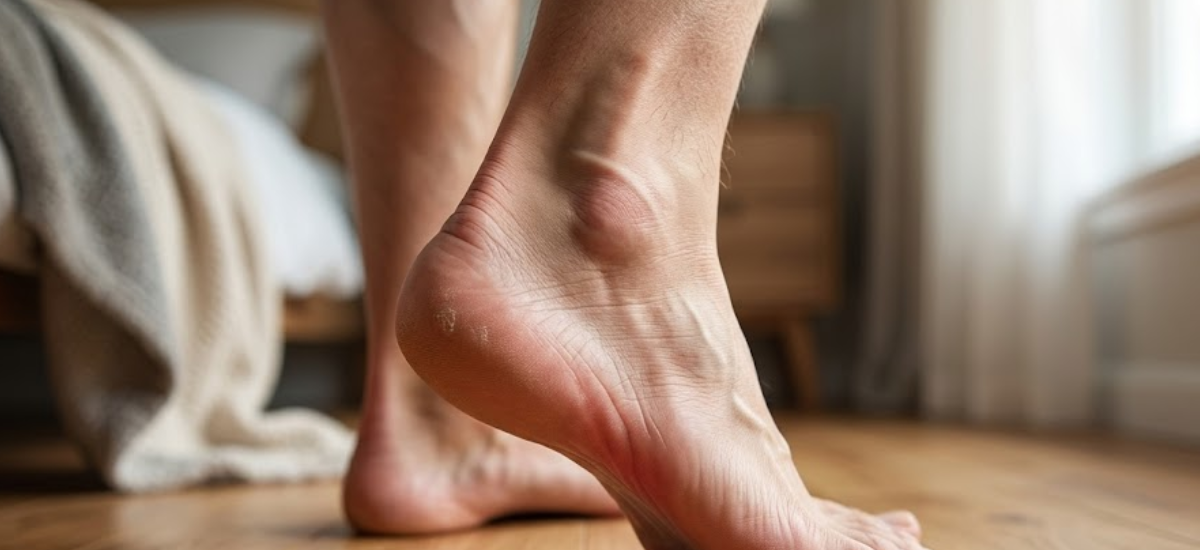
You set your feet on the floor, take your first step, and stop. The pain in your heel is sharp enough to make you catch your breath. You stand still for a minute, take a few careful steps, and it slowly fades. By the time you reach the bathroom, it is almost gone. But tomorrow morning, it will happen again.
This pattern is one of the most recognizable symptoms in podiatric medicine, and morning heel pain is something Dr. Harpreet Minhas at Sole Foot and Ankle hears about every single week. If this sounds familiar, you are not alone. You are also not stuck with it.
Understanding why heel pain hits hardest with those first steps — and knowing when it is time to stop waiting for it to improve on its own — can make a real difference in how quickly you recover.
Why Morning Heel Pain Feels Different From Any Other Foot Pain
The reason your heel hurts worst in the morning is not random. It is a direct result of what happens to your foot while you sleep.
The plantar fascia is a thick band of connective tissue that runs along the bottom of your foot, connecting your heel bone to the base of your toes. Its job is to absorb impact, support your arch, and help propel you forward when you walk. When this tissue becomes irritated or inflamed, the condition is called plantar fasciitis.
During sleep, your foot naturally rests in a relaxed, slightly pointed position. The plantar fascia contracts and shortens in this position over several hours. When your alarm goes off and you stand up, that shortened tissue is suddenly stretched under the full weight of your body. This rapid re-elongation is what causes the sharp, stabbing sensation that makes your first steps feel like walking on broken glass.
This specific pattern even has a clinical name: post-static dyskinesia. It describes pain that develops after a period of rest and improves with movement. If your heel pain follows this exact pattern, that is a strong indicator that plantar fasciitis is the underlying cause.
What Is Plantar Fasciitis and Who Gets It?
Plantar fasciitis is the most common cause of heel pain in adults, affecting more than two million Americans each year according to the American Academy of Orthopaedic Surgeons. Approximately one in ten people will experience it at some point in their lifetime.
Despite its prevalence, it is frequently misunderstood. Many patients assume the pain is caused by a heel spur, which is a bony growth on the heel bone. While heel spurs and plantar fasciitis often coexist, the spur itself is not the source of the pain in most cases. The inflammation of the fascia is.
Who Is Most at Risk?
Plantar fasciitis is more likely to develop in people who:
- Spend long hours standing on hard floors, including teachers, nurses, retail workers, and warehouse employees
- Run or walk for exercise, especially when mileage increases quickly
- Have flat feet, high arches, or both, which alter the way stress is distributed across the foot
- Carry excess body weight, which increases the load on the plantar fascia with every step
- Have tight calf muscles or a shortened Achilles tendon, which limits ankle flexibility and transfers more strain to the heel
- Have recently changed footwear, switched to barefoot or minimalist shoes, or started working on a new type of surface
Age is also a factor. The plantar fascia naturally loses some of its elasticity over time, making adults between 40 and 60 particularly susceptible. That said, younger runners and athletes are far from immune.
Other Conditions That Can Cause Morning Heel Pain
Plantar fasciitis is the most likely explanation for morning heel pain with first-step symptoms, but it is not the only one. A proper evaluation is important because different conditions require different treatments.
Achilles Tendinitis
The Achilles tendon connects the calf muscles to the heel bone. When it becomes inflamed through overuse or repetitive stress, it produces pain at the back of the heel that is also worst in the morning and after periods of sitting. The location of the pain is typically behind the heel rather than underneath it.
Heel Bursitis
Small fluid-filled sacs called bursae cushion the joints throughout the body. A bursa at the back of the heel can become inflamed, causing morning stiffness and pain that is aggravated by pressure from shoes. This is sometimes confused with Achilles tendinitis but responds to different treatment.
Fat Pad Atrophy
The heel has a natural cushion of fatty tissue designed to absorb the shock of walking. Over time, this fat pad can thin and become less effective. Unlike plantar fasciitis, the pain from fat pad atrophy feels more like bruising and worsens throughout the day rather than improving after a few minutes of movement.
Stress Fractures
A stress fracture in the heel bone can cause significant morning pain and tenderness. If your heel pain began suddenly after a change in activity level or was preceded by an injury, a stress fracture should be ruled out. These do not resolve on their own and require proper management to heal correctly.
Heel Pain in Patients With Diabetes
Patients living with diabetes deserve special mention here. Peripheral neuropathy can reduce sensation in the feet, meaning the pain from plantar fasciitis or another heel condition may be less noticeable than it should be. At the same time, poor circulation slows healing and increases the risk that even a mild foot problem can escalate. Dr. Minhas provides specialized diabetic foot care in Valparaiso, IN, and diabetic patients experiencing any new heel pain should seek evaluation rather than waiting to see if it resolves.
When Morning Heel Pain Responds to Home Care
For many patients, early-stage plantar fasciitis and mild morning heel pain do improve with consistent conservative care at home. The key word is consistent. These approaches need to be done daily, not occasionally.
- Stretch before your first step: Before getting out of bed, spend one to two minutes stretching your calf, Achilles tendon, and the bottom of your foot by pulling your toes toward your shin. This pre-stretches the fascia before you put weight on it and is the single most effective thing you can do to reduce first-step pain.
- Wear supportive footwear from the moment you stand: Walking barefoot on hard floors first thing in the morning places significant strain on an already irritated fascia. Shoes or supportive slippers before your feet touch the ground remove that early stress.
- Ice after activity: Applying ice to the heel for 15 to 20 minutes after standing, walking, or exercising helps reduce inflammation. Ice should follow activity, not precede it.
- Over-the-counter anti-inflammatories: For appropriate patients, ibuprofen or naproxen sodium can help manage pain and reduce inflammation when used consistently and as directed.
- Orthotics for arch support: Arch support redistributes pressure away from the heel and along the full length of the foot. Custom orthotics provide the most precise fit, especially for patients with flat feet, high arches, or gait abnormalities that make standard inserts insufficient.
When It Is Time to See a Specialist for Morning Heel Pain
Home care is a reasonable starting point, but it has a time limit. If your morning heel pain has not improved meaningfully after four to six weeks of consistent self-care, or if any of the following apply, it is time for a professional evaluation.
- Pain that has lasted longer than two months with no improvement
- Heel pain that is getting progressively worse despite rest and home treatment
- Pain that is affecting your ability to work, exercise, or carry out daily activities
- Swelling, bruising, or redness around the heel
- Pain that is severe at rest or that wakes you from sleep
- Numbness or tingling in the foot alongside heel pain
- Any new heel pain in a patient with diabetes or poor circulation
At Sole Foot and Ankle, Dr. Minhas evaluates morning heel pain through a combination of clinical examination, gait analysis, and imaging when needed. Understanding whether you have plantar fasciitis, Achilles tendinitis, a stress fracture, or another condition is what determines the right treatment path. You can learn more about evidence-based plantar fasciitis treatment in Valparaiso, IN and what your appointment might involve.
Waiting too long is one of the most common reasons patients end up needing more intensive intervention. Plantar fasciitis treated early with conservative care typically resolves within six to twelve months. Left untreated, chronic cases can take significantly longer and may require procedures that would not have been necessary with earlier care.
Frequently Asked Questions
Is morning heel pain always plantar fasciitis?
Not always, though it is the most common cause by a significant margin. The specific pattern of severe pain with your first steps that gradually improves over 10 to 20 minutes of walking is highly characteristic of plantar fasciitis. Other conditions such as heel bursitis, Achilles tendinitis, fat pad atrophy, and stress fractures can also cause morning heel pain but typically present slightly differently. A podiatric evaluation can confirm the diagnosis and rule out other causes.
Will plantar fasciitis go away on its own if I rest?
Rest reduces the load on the fascia and can ease symptoms temporarily, but complete rest is rarely curative on its own. The underlying factors that caused the problem (tight calf muscles, flat feet, poor footwear, long hours standing) are still present when you resume activity, and the pain typically returns. Most patients see the best outcomes with a structured plan that includes stretching, supportive footwear, and professional guidance rather than simply waiting it out.
How long does morning heel pain typically last?
With consistent treatment, most patients with plantar fasciitis experience significant improvement within three to six months. Without treatment, symptoms can persist for one to two years or longer, and the condition can become chronic. Early evaluation and treatment is the most reliable way to shorten the recovery timeline.
Do I need an X-ray or MRI for heel pain?
Not always. A clinical examination and a description of your symptoms are often enough to diagnose plantar fasciitis with confidence. X-rays can be useful to identify heel spurs, rule out stress fractures, or check bone density. MRI is typically reserved for cases where the diagnosis is unclear or symptoms are not responding as expected to treatment. Dr. Minhas determines on a case-by-case basis whether imaging is needed.
Can the wrong shoes cause morning heel pain?
Yes. Footwear is one of the most common and most underappreciated contributing factors. Shoes with inadequate arch support, worn-out cushioning, or excessive flexibility place more strain on the plantar fascia with every step. Switching to barefoot or minimalist shoes too quickly is a particularly common trigger in active patients. The right shoe for your foot type and activity level matters, and in some cases the change alone can significantly reduce or resolve symptoms.
Stop Starting Every Morning in Pain
Morning heel pain that strikes with your first steps is not something you have to accept as a normal part of aging or an active lifestyle. In most cases it has a clear cause, a clear treatment plan, and a good chance of full resolution when addressed appropriately. The longer it goes unaddressed, the harder it becomes to treat, which is why an early evaluation is always worthwhile.
If your heel has been hurting every morning and you are ready for answers, Sole Foot and Ankle is here to help.
Dr. Harpreet Minhas and the team in Valparaiso, Indiana provide expert evaluation and treatment for morning heel pain, plantar fasciitis, and all foot and ankle conditions affecting your comfort and mobility.
Call us at +1 219-464-9588 or visit solefootdoc.com to book your appointment.
Sole Foot and Ankle
2308 Roosevelt Rd, Valparaiso, IN 46383
Sole Foot and Ankle. One Step Ahead.