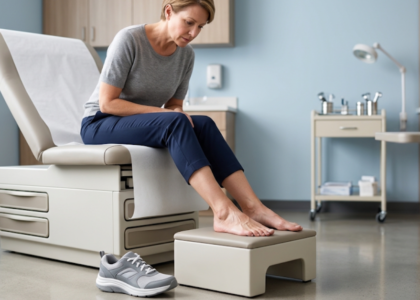
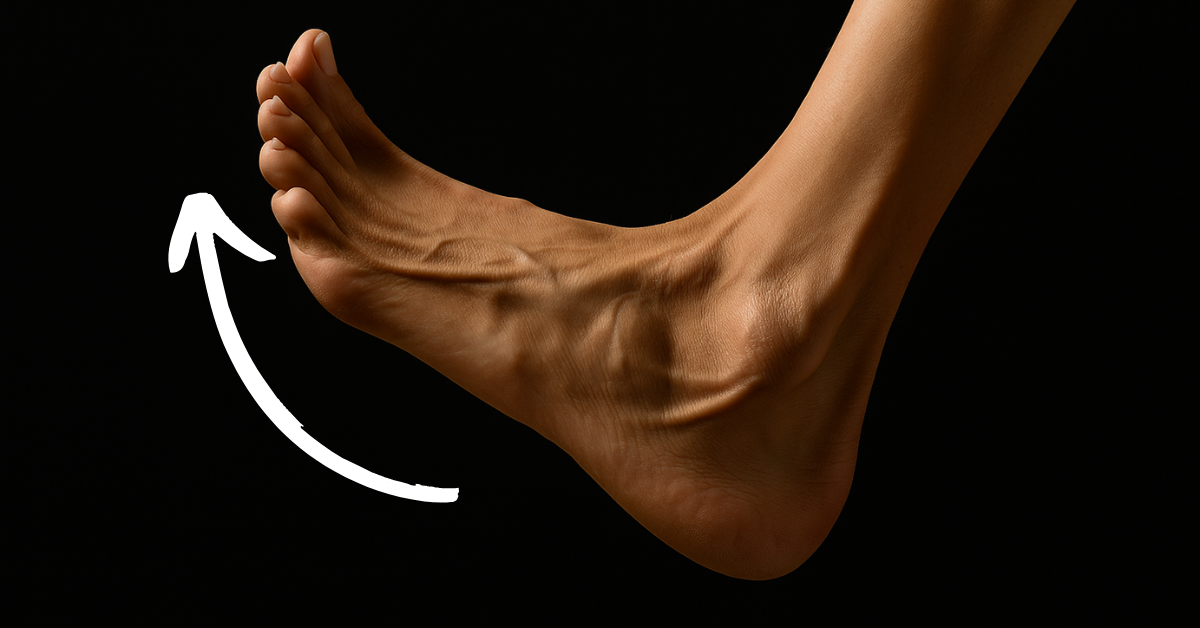
When lifting your foot or pulling your toes upward toward your shin suddenly feels painful, you may be dealing with dorsiflexion pain. This kind of discomfort often points to an underlying issue with your tendons or muscles; most commonly extensor tendonitis.
At Sole Foot and Ankle in Valparaiso, we see this condition often in runners, athletes, and anyone who spends long hours on their feet. Understanding why dorsiflexion hurts and what it says about your foot health can help you take the right steps toward recovery.
What Is Dorsiflexion?
Dorsiflexion is the movement that happens when you lift your foot upward, bringing your toes closer to your shin. It’s a normal motion used in walking, running, and climbing stairs.
This action relies on a group of tendons on the top of your foot and front of your ankle; called the extensor tendons. These tendons are responsible for flexing the foot upward and stabilizing it during movement.
When these tendons become inflamed or irritated, even simple movements like lifting your foot can cause sharp or aching pain. This condition is known as extensor tendonitis.
The Key Test: Pain When Lifting Your Foot Up (Dorsiflexion Pain)
What Is Happening When You Feel Pain?
If you feel pain when you try to lift your foot (or resist that upward motion), it often means your extensor tendons are inflamed. These tendons run along the top of your foot and attach to your toes, helping them extend upward.
When overused, strained, or compressed by tight footwear, the tendons can become irritated. The result? Pain, stiffness, and tenderness; especially noticeable during dorsiflexion.
How to Recognize Dorsiflexion Pain
You may experience:
- Pain on the top of your foot or front of your ankle
- Swelling or warmth over the tendons
- Discomfort that worsens when you lift your foot or wear tight shoes
- Pain that improves with rest or loosening your shoelaces
Why Your Foot Hurts: Common Causes of Dorsiflexion Pain
1. Extensor Tendonitis
The most frequent cause of dorsiflexion pain is extensor tendonitis. This happens when the tendons that help lift your foot become inflamed from overuse, tight shoes, or repetitive stress.
2. Tight Footwear and Lacing Pressure
Shoes that are too tight across the top of the foot can compress the extensor tendons, leading to pain during dorsiflexion. Improper lacing patterns can worsen the issue by adding constant pressure to the top of the foot.
3. Training and Overuse Injuries
Runners, especially those training on hills or uneven terrain, often develop dorsiflexion pain due to repetitive stress on the tendons. Overuse without enough recovery time can lead to inflammation and tenderness.
4. Biomechanical Factors
High arches, flat feet, or tight calf muscles can change how your foot moves, placing extra strain on the tendons during dorsiflexion. A podiatrist can identify these imbalances through a gait analysis.

Is It Extensor Tendonitis or a Stress Fracture?
While both conditions cause pain on the top of the foot, there are key differences:
| Feature | Extensor Tendonitis | Stress Fracture |
|---|---|---|
| Pain Location | Top of foot, along tendons | Localized area on a bone |
| When It Hurts | During movement or when lifting the foot | When bearing weight or after activity |
| Swelling | Mild, diffuse | More localized |
| Touch Sensitivity | Pain when pressing along tendons | Sharp pain when pressing bone |
| Relief | Improves with rest or loosening shoes | May persist even at rest |
If you’re unsure, it’s best to have your foot evaluated at Sole Foot and Ankle. A proper diagnosis ensures the right treatment plan and helps prevent complications.
Expert-Recommended Treatment for Dorsiflexion Pain
Immediate At-Home Relief (RICE Protocol)
Start by reducing inflammation and avoiding movements that trigger pain:
- Rest: Avoid running or long walks until pain subsides.
- Ice: Apply ice for 15–20 minutes several times a day.
- Compression: Lightly wrap the foot if there’s swelling.
- Elevation: Keep your foot raised to reduce inflammation.
Avoid tight shoes and consider re-lacing them to reduce pressure on the top of your foot.
Professional Treatment Options
At Sole Foot and Ankle, Dr. Minhas may recommend:
- Custom orthotics to correct gait issues
- Laser therapy or extracorporeal shockwave therapy (ESWT) to promote healing
- Corticosteroid injections for persistent inflammation
- Physical therapy to improve strength and flexibility
These treatments focus on healing the tendons and preventing recurrence.
From Marathon Runner to Podiatrist: Dr. Minhas’s Approach in Valparaiso
As both a marathon runner and a podiatrist in Valparaiso, Dr. Harpreet Minhas brings firsthand understanding of overuse injuries like dorsiflexion pain and extensor tendonitis.
His patient-centered approach combines clinical expertise with practical advice for athletes and active individuals; helping patients not just recover, but perform better.
Get Back on Your Feet ; Pain-Free
If lifting your foot causes pain or discomfort, don’t ignore it. Early evaluation can prevent chronic issues and keep you moving comfortably.
At Sole Foot and Ankle Valparaiso, we’re dedicated to diagnosing and treating dorsiflexion pain, extensor tendonitis, and other foot and ankle problems.
Call 219-464-9588 or schedule your appointment online today.