
That burning, aching, or sharp ball of foot pain has a name. But here is the problem with that name: metatarsalgia describes where it hurts, not what is actually wrong.
Metatarsalgia is one of the most common foot complaints in podiatric practice and one of the most frequently undertreated, because the term functions as an umbrella for multiple distinct conditions with different causes and completely different treatment requirements. Treating ball of foot pain generically, with off-the-shelf metatarsal pads or arch supports, without identifying which of the several possible underlying causes is actually present, is the most common reason patients spend months managing a problem that is not improving.
This guide explains what metatarsalgia is, what conditions fall under that umbrella, how to distinguish between them, and what effective treatment looks like once the correct diagnosis is established.
What Metatarsalgia Actually Means for Ball of Foot Pain
The word metatarsalgia comes from metatarsal, the five long bones that connect the midfoot to the toes, and algia, meaning pain. Metatarsalgia describes pain and tenderness in the ball of the foot rather than a single disease.
The ball of the foot is the padded area beneath the metatarsal heads, the rounded ends of the metatarsal bones where they articulate with the toe bones. This area absorbs an enormous amount of force during walking and running, bearing up to three times body weight during push-off at normal walking speeds.
When any structure in this area, bone, joint, ligament, nerve, or soft tissue, is subjected to more force than it can handle, pain develops. The clinical challenge is identifying which structure is symptomatic, because the treatment for a stress fracture is radically different from the treatment for a nerve compression, and applying the wrong approach wastes weeks and risks worsening the underlying problem.
The Conditions That Cause Ball of Foot Pain
The most important clinical decision with ball of foot pain is not which treatment to start with. It is identifying the correct subtype.
Primary Metatarsalgia: Mechanical Overloading
Primary metatarsalgia is the form most people mean when they use the term. It involves pain from excessive pressure and mechanical overloading of the metatarsal heads, the rounded bony prominences at the ball of the foot, without an underlying structural or systemic cause.
The root causes are mechanical: anything that shifts weight forward onto the metatarsal heads or reduces forefoot cushioning can trigger primary metatarsalgia. Common contributors include high heels, which transfer body weight onto the forefoot with every step, hallux valgus (bunions), which destabilize the first metatarsal and overload the lesser metatarsals as a result, hypermobile first ray, calf tightness that limits ankle dorsiflexion and increases forefoot loading during push-off, flat feet and high arches, both of which alter how pressure is distributed across the forefoot, and age-related loss of the plantar fat pad that normally cushions the metatarsal heads.
The pain is typically a diffuse aching, burning, or pressure sensation under the ball of the foot that worsens with prolonged standing, walking, or running and improves with rest. It is often described as feeling like walking on a pebble or a marble.
Plantar Plate Tear
The plantar plate is a strong fibrocartilaginous ligament that runs along the bottom of each MTP joint, stabilizing the toe and protecting the joint from dorsal hyperextension during push-off. When this structure tears, typically at the second MTP joint, it produces sharp ball of foot pain, instability of the affected toe, and often a progressive drift or crossing of the second toe over the big toe.
Clinical signs include a positive Lachman drawer test in which the toe can be pulled upward with abnormal laxity, the V-sign in which a gap develops between the second and third toes due to joint instability, and pain reproduced with plantar compression at the MTP joint. Plantar plate tears are frequently missed or attributed to generic metatarsalgia, and they do not respond to the standard metatarsalgia conservative treatment protocol.
Morton’s Neuroma
Morton’s neuroma is a thickening of the interdigital nerve, most commonly between the third and fourth metatarsal heads, caused by repetitive compression and irritation. It produces burning, shooting, or electric pain in the ball of the foot with a characteristic sensation of standing on a pebble or rolled-up sock, often with tingling or numbness radiating into the adjacent toes.
The distinguishing features are the specific location between two specific toes rather than diffuse forefoot pain, the neurological character of the symptoms, the Mulder’s click that can sometimes be elicited by compressing the metatarsal heads together during examination, and the relief from removing footwear and massaging the foot.
Morton’s neuroma and metatarsalgia are frequently confused because they share a similar location and description. The treatment approaches differ meaningfully, with Morton’s neuroma responding to nerve-specific interventions including injection therapy and in persistent cases surgical excision, rather than the mechanical load redistribution that addresses primary metatarsalgia.
Metatarsal Stress Fracture
A stress fracture of the metatarsal is a small crack in one of the metatarsal bones caused by repetitive loading that exceeds the bone’s capacity to remodel. It produces point-specific pain at one metatarsal bone rather than the diffuse ball of foot pain of primary metatarsalgia, and it worsens progressively with continued activity rather than improving after the first few minutes of walking.
Stress fractures are particularly common in runners who have recently increased mileage, military recruits, and individuals who have just started a new exercise program. The second and third metatarsals are the most frequently affected. Continuing to load a metatarsal stress fracture without offloading can lead to complete fracture, making accurate diagnosis before starting treatment critically important.
Sesamoiditis
The two sesamoid bones sit beneath the first metatarsal head directly under the big toe joint. They act as pulleys for the tendons that control the big toe and protect the MTP joint from direct impact. Sesamoiditis is inflammation of the sesamoid bones or surrounding tissue, producing localized pain and tenderness directly under the big toe joint that worsens with push-off and activities that load the forefoot.
Sesamoiditis is distinct from metatarsalgia affecting the lesser metatarsals in its precise location under the first MTP joint, and it requires specific offloading of the sesamoid area rather than general metatarsal padding.
Freiberg’s Infraction
Freiberg’s infraction is an osteochondrosis of the metatarsal head, most commonly the second, in which a disruption of blood supply leads to flattening and collapse of the metatarsal head. It most often affects adolescent and young adult females and produces persistent ball of foot pain specifically at the second metatarsal head that worsens with activity and does not follow the diffuse pattern of primary metatarsalgia. X-rays show the characteristic flattening and sclerosis of the metatarsal head.
Inflammatory Arthritis
Rheumatoid arthritis, psoriatic arthritis, and other inflammatory joint diseases frequently affect the MTP joints and can produce ball of foot pain, swelling, and tenderness that mimics metatarsalgia. The distinguishing features include involvement of multiple joints, bilateral symptoms, morning stiffness that improves with movement, and systemic features. Laboratory markers including rheumatoid factor, anti-CCP antibodies, and inflammatory markers support the diagnosis.

Dealing with foot or ankle pain? Call Sole Foot & Ankle at 219-464-9588 or request an appointment.
Why the Autumn Footwear Transition Triggers Ball of Foot Pain
October is one of the highest-incidence months for new ball of foot pain presentations, and the seasonal footwear transition is a major reason.
Through spring and summer, many patients wear sandals, flip-flops, or open shoes that provide minimal forefoot pressure and allow the foot to function in a relatively unconstrained way. As temperatures drop, they transition to enclosed boots, heavier shoes, and footwear with more rigid soles and narrower toe boxes.
This transition concentrates forefoot pressure in ways that sandals do not. Narrow autumn boots compress the metatarsal heads together, increasing interdigital nerve pressure and triggering Morton’s neuroma symptoms. Heeled ankle boots shift weight forward onto the forefoot. Stiff-soled winter boots reduce the natural shock absorption of the foot’s own movement.
For patients who already have subclinical forefoot pathology, an asymptomatic plantar plate injury or a nerve that is already slightly enlarged, the footwear transition can be the trigger that produces the first symptomatic flare. For runners who increase indoor treadmill mileage as outdoor conditions worsen, the change in surface and stride pattern can push a metatarsal to its stress fracture threshold.
How Ball of Foot Pain Is Diagnosed
Accurate diagnosis of ball of foot pain requires a structured evaluation that goes beyond the location of pain.
History examines the character of the pain, whether it is burning and electric suggesting nerve involvement or aching and pressure suggesting mechanical overload, the specific location including which metatarsal and whether it radiates into the toes, the activities that provoke it, and any recent changes in footwear or activity level.
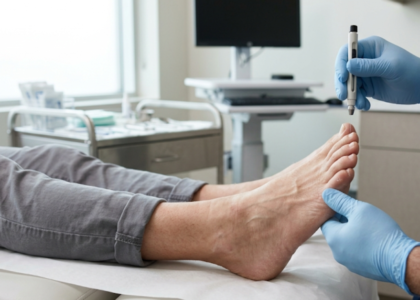
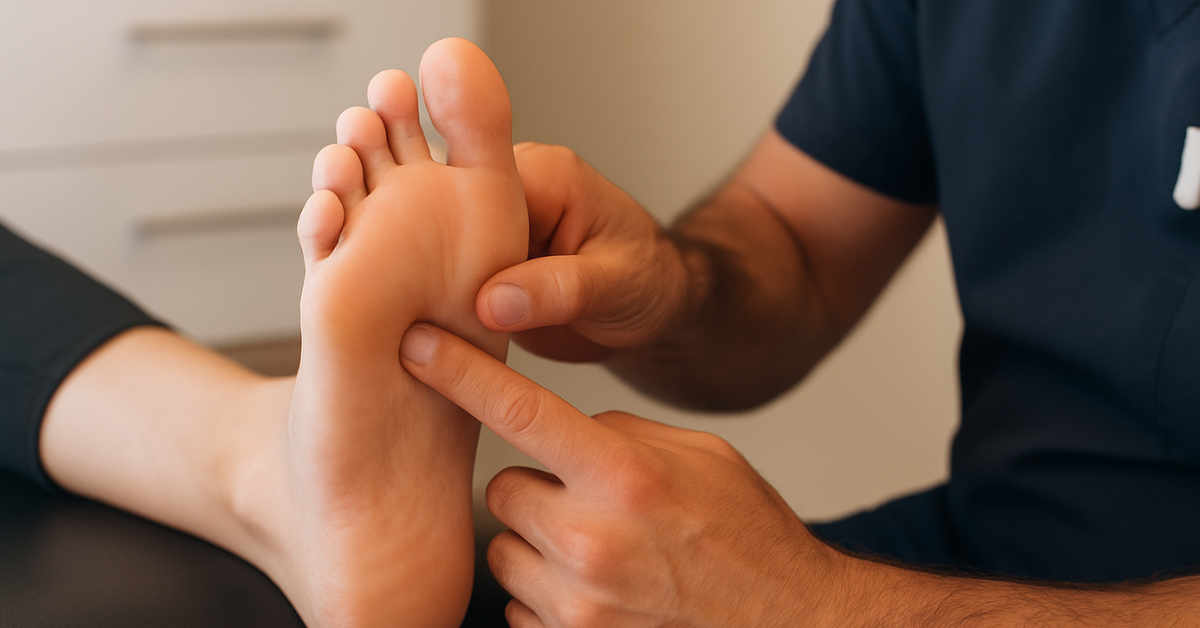
Physical examination includes palpation of each metatarsal head individually to identify the specific symptomatic structure, the Mulder’s test for Morton’s neuroma, the drawer test for plantar plate integrity, assessment of first ray mobility and hallux valgus deformity, and evaluation of calf flexibility and ankle dorsiflexion range.
Imaging begins with weight-bearing X-rays to evaluate metatarsal alignment, identify stress fracture changes, and assess for Freiberg’s infraction or inflammatory joint changes. Diagnostic ultrasound is the preferred modality for visualizing Morton’s neuroma, plantar plate tears, and soft tissue pathology. MRI provides the most detailed assessment of stress fractures, plantar plate injuries, and the full extent of inflammatory changes when clinical findings are inconclusive.
The most common error is treating ball of foot pain generically without identifying which of the several possible causes is actually present.
Treatment Options for Ball of Foot Pain
Treatment is entirely dependent on the specific diagnosis. The following covers the evidence-based approach for the most common conditions.
Footwear Modification
For all forms of ball of foot pain, footwear is the first intervention. Shoes with a wide toe box reduce compression on the metatarsal heads and interdigital nerves. A stiff rocker sole reduces the flexion stress at the MTP joints during push-off. Low or no heel reduces forefoot loading. These modifications reduce the mechanical driver of most forefoot pain conditions and are often sufficient for mild presentations when combined with other conservative measures.
Custom Orthotics with Metatarsal Offloading
Custom orthotics with a metatarsal dome or bar are among the most effective conservative interventions for primary metatarsalgia. A metatarsal dome is a raised contour placed just proximal to the metatarsal heads that redistributes load from the painful metatarsal heads to the metatarsal shafts, effectively lifting the heads off the ground surface. The dome must be precisely positioned to be effective. Generic pharmacy insoles with metatarsal pads frequently provide inadequate relief because the pad position is not calibrated to the individual’s metatarsal anatomy.
Custom orthotics with metatarsal bar or dome targeting structural causes achieve their full benefit within six to eight weeks of consistent use. They are most effective when fabricated following a gait analysis that identifies the specific loading pattern driving the patient’s forefoot pain.
Injection Therapy
Corticosteroid injection into the MTP joint capsule reduces inflammation in primary metatarsalgia and plantar plate injuries. For Morton’s neuroma, injection of corticosteroid around the affected nerve reduces inflammation and perineural swelling, providing meaningful relief in the majority of cases. Multiple injections may be required for full effect. Alcohol sclerosing injections are an alternative for Morton’s neuroma when corticosteroid injections have provided temporary but not lasting relief.
Physical Therapy and Intrinsic Strengthening
Strengthening the intrinsic foot muscles that support the MTP joints reduces the load transferred to the metatarsal heads during push-off. Calf stretching improves ankle dorsiflexion and reduces the forefoot compensation that drives metatarsalgia in patients with tight gastrocnemius muscles. These are particularly important components of treatment for runners and active patients with ball of foot pain.
Offloading for Stress Fractures
Metatarsal stress fractures require offloading through a stiff-soled shoe or walking boot to allow healing. Continued loading without protection risks complete fracture. Return to running follows a structured protocol based on imaging confirmation of healing and progressive load tolerance testing.
Surgical Options
Surgery is generally not the first treatment for ball of foot pain and is reserved for conditions that have not responded to a full course of conservative care. Surgical options vary by diagnosis. Morton’s neuroma excision removes the thickened nerve segment and provides lasting relief for the majority of patients who reach that threshold. Plantar plate repair reconstructs the torn ligament and restores MTP joint stability. Metatarsal osteotomy corrects structural malalignment that is driving chronic overloading of specific metatarsal heads. Sesamoidectomy removes a damaged sesamoid bone when conservative measures have been exhausted.
When To Seek Professional Evaluation for Ball of Foot Pain
A podiatric evaluation is appropriate when ball of foot pain has persisted for more than two to three weeks without clear improvement, when pain is limiting your daily activity, exercise, or ability to wear normal footwear, when the pain has a burning or electric quality that radiates into the toes suggesting nerve involvement, when there is visible swelling, redness, or a sensation of instability at any MTP joint, when you have a second toe that is drifting or crossing, when pain came on after increasing exercise volume or changing footwear, or when you have diabetes or peripheral neuropathy and any new forefoot pain develops.
The last point deserves emphasis. Ball of foot pain in diabetic patients carries elevated risk because the increased pressure at the metatarsal heads is a primary site of ulcer formation in neuropathic feet. A new forefoot pressure area in a diabetic patient with neuropathy requires professional assessment rather than home management.
Frequently Asked Questions About Ball of Foot Pain
How do I know if my ball of foot pain is metatarsalgia or Morton’s neuroma?
The character and location of the pain provide the most important distinguishing clues. Primary metatarsalgia produces a diffuse aching, burning, or pressure sensation across the ball of the foot that is worse with weight bearing and better with rest. Morton’s neuroma produces burning, electric, or shooting pain located specifically between two toes, most often the third and fourth, often with tingling or numbness in those toes, and a sensation of something bunched up inside the shoe. A clinical examination including the Mulder’s test and diagnostic ultrasound confirms the diagnosis when clinical features are not fully distinguishing.
Can metatarsalgia go away on its own?
Mild cases of primary metatarsalgia with an identifiable trigger, such as a recent increase in activity or a change to harder flooring, may improve with rest and footwear modification over several weeks. However, metatarsalgia with an underlying structural cause such as bunions, high arches, or plantar plate injury will not self-resolve because the mechanical driver is not removed by rest alone. Any ball of foot pain that persists beyond two to three weeks or is limiting activity warrants professional evaluation.
Are metatarsal pads from the pharmacy effective?
Over-the-counter metatarsal pads can provide modest relief for mild primary metatarsalgia, but they have two significant limitations. First, they are not calibrated to the individual’s metatarsal anatomy, meaning the pad may not be positioned correctly to offload the symptomatic metatarsal head. Second, they do not address the underlying mechanical cause of the overloading. Custom orthotics with a precisely positioned metatarsal dome or bar provide significantly more consistent and durable relief than off-the-shelf pads.
Can running cause metatarsalgia?
Yes. Running significantly increases forefoot loading compared to walking, and any factor that concentrates load on specific metatarsal heads, calf tightness, inadequate shoe cushioning, a sudden increase in mileage, or transitioning to a minimalist shoe, can trigger primary metatarsalgia or a metatarsal stress fracture. Runners experiencing ball of foot pain should have both the mechanical contributors and the footwear evaluated before resuming full training volume.
Is surgery needed for ball of foot pain?
The majority of ball of foot pain conditions respond well to conservative treatment when the correct diagnosis is established and the appropriate intervention is applied. Surgery is reserved for conditions that have not responded to a complete conservative care program, typically after three to six months of appropriate treatment. The specific procedure depends on the underlying diagnosis. Morton’s neuroma excision, plantar plate repair, and metatarsal osteotomy each address a different structural problem and are appropriate for different patient presentations.
Getting Help for Ball of Foot Pain in Valparaiso, IN
For patients in Valparaiso, Portage, Chesterton, Merrillville, and throughout Northwest Indiana with persistent ball of foot pain, Dr. Harpreet Minhas at Sole Foot & Ankle provides a comprehensive forefoot evaluation that goes beyond generic metatarsalgia management to identify the specific diagnosis driving symptoms. The evaluation includes clinical examination with specific tests for each forefoot condition, on-site digital X-ray and gait analysis, diagnostic ultrasound for soft tissue assessment when indicated, custom orthotic prescription with metatarsal offloading when appropriate, and a treatment plan matched to the actual diagnosis rather than the symptom location.
Ready to Get Back on Your Feet?
If the ball of your foot hurts with every step, Dr. Harpreet Minhas at Sole Foot & Ankle in Valparaiso can pinpoint the cause of your metatarsalgia and build a plan to take the pressure off.