Most people choose shoes based on comfort, appearance, or price. For people with diabetes, finding the right shoes for diabetes is a medical decision, not a shopping preference. The wrong pair of shoes can create a pressure point that, in the presence of neuropathy and poor circulation, develops into an ulcer. Left untreated, that ulcer can progress to infection, bone involvement, and amputation.
This is not a worst-case hypothetical. Up to 85% of all lower extremity amputations in diabetic patients are preceded by a foot ulcer, and a significant proportion of those ulcers begin at a site of abnormal shoe-to-foot pressure. Footwear selection is a medical decision for people with diabetes, not a shopping preference.
This guide explains how to choose the right shoes for diabetes: what makes a shoe appropriate or dangerous for a diabetic foot, what features to look for, who qualifies for Medicare-covered therapeutic footwear, and when a prescription is needed instead of an off-the-shelf solution.
Why Choosing the Right Shoes for Diabetes Matters
To understand why shoe selection matters so much in diabetes, it helps to understand what the disease does to the feet.
Neuropathy removes protective sensation. People at moderate or high risk for foot ulceration have often lost their ability to feel pain or pressure and may not adequately judge the fit of their footwear or the level of pressure on their foot. A shoe that is rubbing, too tight across the toe box, or creating a localized pressure point produces no warning signal in a foot with significant neuropathy. The damage accumulates silently until a visible wound has formed.
Poor circulation impairs healing. When peripheral arterial disease accompanies diabetes, even a minor abrasion or friction blister becomes a wound that cannot heal efficiently. The tissue does not receive the oxygen and immune cells it needs to repair itself. Small wounds become chronic wounds.
Foot deformities concentrate pressure. Diabetes contributes to structural changes in the foot over time, including hammertoes, claw toes, bunions, and Charcot deformity. Each of these creates a bony prominence that concentrates pressure at a specific site during walking. Prevention of diabetic foot ulcers is crucial, given the high risk of ulcer development of 34% and recurrence greater than 40%, with up to 85% of amputations being preceded by ulceration.
The practical implication is clear. A shoe that creates any sustained pressure point on a diabetic foot, however minor it might feel to a healthy patient, carries real ulceration risk.
What Diabetic Therapeutic Footwear Actually Does
Diabetic shoes are not simply wider or more comfortable versions of regular shoes. Understanding what the right shoes for diabetes actually do is the first step to choosing well — they are medical devices designed to address the three specific problems described above.
Pressure redistribution. Scientific evidence shows that therapeutic footwear, particularly rigid-soled models with multilayer total-contact insoles, significantly reduces the risk of ulcer recurrence, provided that specific plantar pressure targets are achieved. The insole design is as important as the shoe itself. A custom-molded total contact insole spreads load across the entire plantar surface rather than concentrating it at bony prominences.
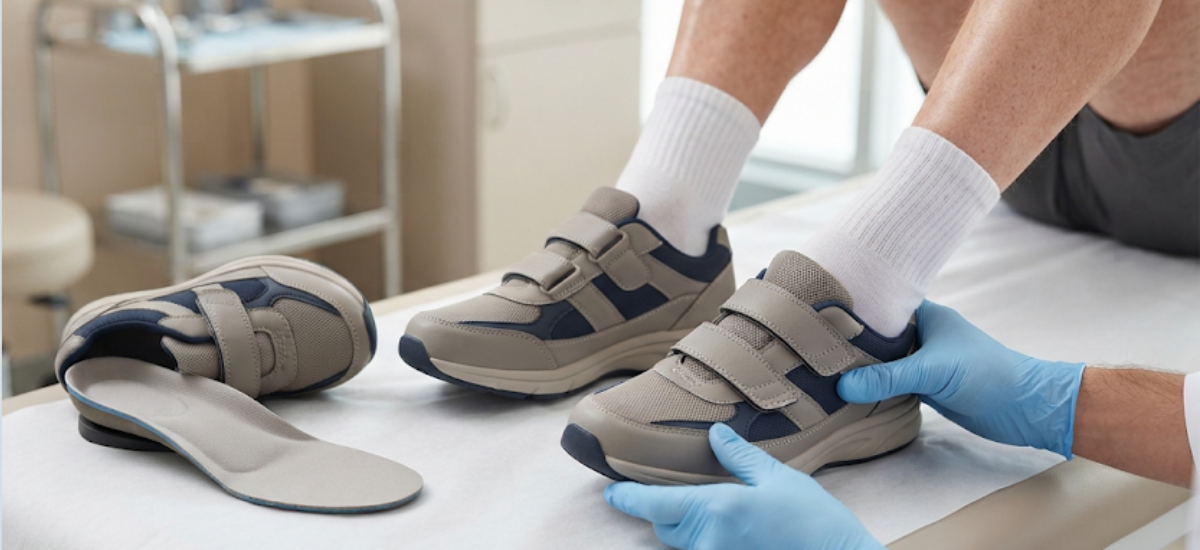
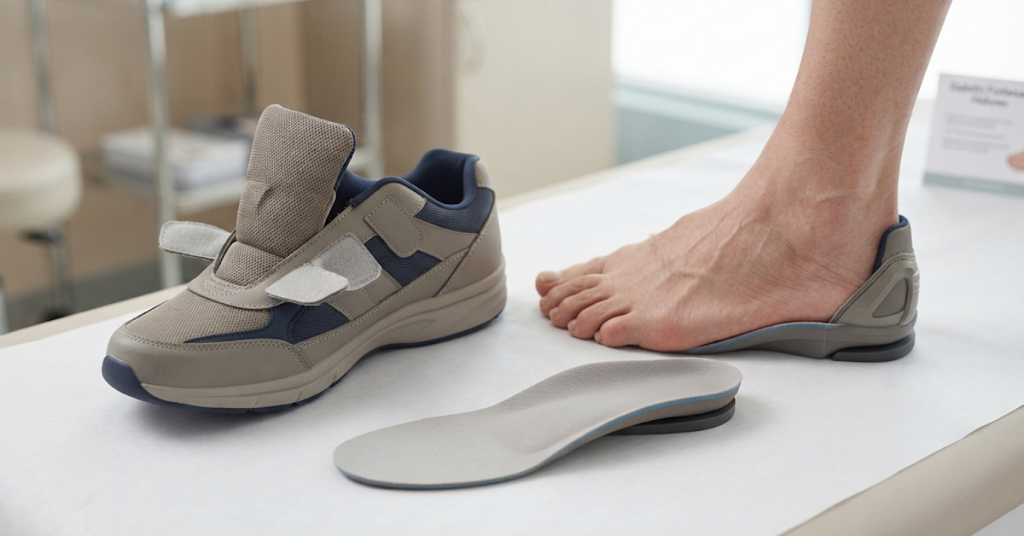
Accommodation of deformity. Depth shoes have extra vertical space inside the shoe to accommodate custom insoles, toe deformities, and the structural changes that diabetes produces in the foot over time. Without adequate depth and width, shoes push against deformed toes and bony prominences with every step.
Protection from external trauma. A diabetic foot cannot feel a pebble inside the shoe, a seam rubbing against the little toe, or heat from hot pavement conducted through a thin sole. Therapeutic footwear uses seamless or minimal-seam linings, protective insoles, and soles that insulate against temperature extremes and ground irregularities.
Therapeutic footwear is a cornerstone of secondary prevention because it reduces plantar pressure and mechanical stress.
Key Features of the Right Shoes for Diabetes
Not all shoes marketed as diabetic footwear provide the same level of protection. Here is what to evaluate when choosing the right shoes for diabetes.
Depth construction. Extra-depth shoes provide approximately 3/8 inch more interior depth than standard footwear. This depth accommodates custom insoles without compressing the toes, and provides the space needed for toe deformities to sit without friction.
Wide and deep toe box. The toe box should provide full clearance for all five toes without any contact with the top or sides of the shoe. Even the slightest compression against a hammertoe or bunion creates a pressure point. The toe box should be rounded or square, never tapered or pointed.
Seamless or minimal-seam interior lining. Interior seams are a leading cause of friction injuries in neuropathic feet. Therapeutic footwear uses seamless linings or covers seams with soft padding to eliminate friction contact points.
Cushioned, rigid sole. A rigid or semi-rigid outer sole reduces the flexion stress transmitted through the forefoot during push-off, protecting the metatarsal heads. A cushioned midsole absorbs impact. The combination provides both pressure redistribution and shock absorption.
Firm, supportive heel counter. A rigid heel counter stabilizes the rear foot and prevents the foot from shifting inside the shoe, which would create friction and shear stress on the heel and ankle.
Adjustable closure. Laces, Velcro, or buckle closures allow the shoe to be adjusted for swelling, which is common in diabetic feet and can change significantly throughout the day. Slip-on shoes cannot be adjusted and frequently create pressure when feet swell in the afternoon.
Breathable materials. Shoes made from leather or breathable synthetic materials reduce moisture accumulation inside the shoe. Moisture softens skin and dramatically increases the susceptibility to friction injury and fungal infection.
What To Avoid
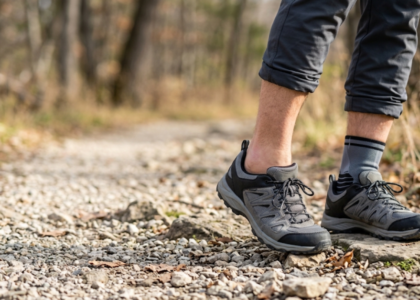
Several features that are acceptable in standard footwear become significant risks for diabetic patients. Pointed or narrow toe boxes that compress the toes. High heels that shift body weight forward onto the metatarsal heads, dramatically increasing forefoot plantar pressure. Slip-on styles that cannot be adjusted for foot volume changes. Flip-flops, sandals, and open-toed shoes that leave the foot vulnerable to direct trauma. Worn-out athletic shoes that have lost their cushioning and structural support. Shoes purchased without being properly fitted, either by a knowledgeable fitter or a podiatrist.
For diabetic patients, never buying shoes online without a professional fitting first is a practical rule worth following consistently. Avoiding these features is just as important as finding the right shoes for diabetes in the first place.
Custom Insoles vs. Off-the-Shelf Insoles
The insole inside the shoe is as clinically important as the shoe itself. There are three categories of insoles relevant to diabetic footwear.
Standard manufacturer insoles come inside most off-the-shelf shoes. They provide minimal cushioning and no pressure redistribution. They are not appropriate as the primary insole for a high-risk diabetic foot.
Over-the-counter diabetic insoles provide improved cushioning and some accommodation features. They are appropriate for lower-risk patients without significant neuropathy, deformity, or prior ulceration.
Custom-molded insoles are fabricated from a 3D impression of the individual foot and prescriptively designed to offload specific high-pressure sites identified through plantar pressure analysis. They are the standard of care for moderate-to-high risk diabetic patients. When a foot deformity or pre-ulcerative lesion is present, it becomes even more important to change foot biomechanics and reduce plantar pressure on at-risk locations. This may require custom orthotics, custom-made footwear, or toe orthoses.
Medicare Coverage for Diabetic Shoes and Insoles
This is the most important section of this guide for Medicare-eligible patients, because most of them are entirely unaware that their footwear may be a covered medical benefit.
Medicare covers therapeutic shoes or inserts for people with diabetes and severe diabetes-related foot disease. The doctor who treats your diabetes must certify the need for therapeutic shoes or inserts.
What Medicare covers each calendar year: Medicare Part B covers one pair of therapeutic depth shoes or custom-molded shoes plus three pairs of inserts per calendar year for diabetic patients with qualifying foot conditions.
Who qualifies: Qualifying conditions include peripheral neuropathy with evidence of callus formation, a history of pre-ulcerative calluses, a history of previous foot ulceration, foot deformity such as hammertoes, bunions, Charcot foot, or prominent metatarsal heads, previous amputation of the foot or part of the foot, and poor circulation documented by clinical examination, ankle-brachial index, or vascular studies.
What it costs: After you meet the Part B deductible for the year, you pay 20% of the Medicare-approved amount and Part B pays the other 80%. On a $200 Medicare-approved pair, your share is about $40 once the deductible is met. If you have a Medicare supplement (Medigap) policy, it typically covers the remaining 20% coinsurance. Patients with both Medicare and Medicaid are usually dual-eligible and pay nothing out of pocket.
How the process works: The physician managing your diabetes must certify your need for therapeutic footwear within three months before delivery and document a diabetes visit within six months before delivery. A podiatrist or other qualified provider then prescribes the shoes and custom insoles. The certifying physician cannot also be the supplier billing for the shoes.
Many eligible diabetic patients in Valparaiso and Northwest Indiana are receiving no benefit from a program that could be providing them with annually renewed therapeutic footwear at little to no out-of-pocket cost. If you have Medicare and diabetes, ask your podiatrist whether you qualify, since Medicare coverage can make the right shoes for diabetes far more affordable.
Prescription vs. Off-the-Shelf Footwear
Not every diabetic patient needs prescription therapeutic footwear. The appropriate level of footwear protection is determined by the patient’s risk level, which is based on neuropathy severity, vascular status, deformity, and prior ulceration history.
Clinical guidelines recommend educating moderate-to-high risk people with diabetes to wear properly fitting, accommodative, therapeutic footwear, and prescribing therapeutic footwear that has a demonstrated plantar pressure relieving effect during walking to help prevent plantar foot ulcer recurrence.
For lower-risk patients without significant neuropathy, deformity, or prior ulcers, a well-fitted extra-wide athletic shoe with a cushioned insole may provide adequate protection. The key is professional fitting and regular assessment.
For moderate-to-high-risk patients, prescription therapeutic footwear with custom-molded insoles is the appropriate standard of care. These patients have one or more of the qualifying conditions described in the Medicare section above and face a meaningfully elevated risk of ulceration from any shoe that does not meet therapeutic footwear specifications.
Consistent Wear Matters As Much As Fit
The most clinically well-designed therapeutic shoe provides no protection if the patient is not wearing it consistently. Therapeutic footwear reduces plantar ulcer recurrence when it demonstrably lowers pressure at the at-risk site and when it is actually worn. Both conditions matter, and both are frequently unmet. Adherence data show the largest gap lies indoors, during the hours of greatest cumulative weight-bearing.
Walking barefoot inside the house is one of the most common and most underappreciated risks for diabetic foot injury. The kitchen, the bathroom, and the bedroom floor all carry risks that diabetic patients consistently underestimate because they feel fine. Indoor diabetic footwear or house shoes that meet the same therapeutic standards as outdoor footwear are an important component of full-time foot protection, the right shoes for diabetes matter indoors, not just outside.
When To Get a Professional Footwear Evaluation
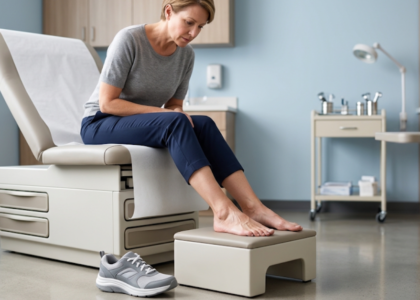
A professional podiatric footwear evaluation is appropriate for any diabetic patient at the following stages, and it pairs naturally with your annual diabetic foot exam.
At diagnosis, to establish a baseline footwear standard appropriate to the current risk level and to be educated about what to look for and avoid going forward.
When neuropathy is diagnosed or worsens, because the ability to self-assess shoe fit and comfort becomes progressively less reliable as sensation decreases.
When foot deformity develops, including hammertoes, bunions, Charcot changes, or prominent metatarsal heads, because standard footwear may no longer accommodate the foot structure safely.
After any foot ulcer, because the risk of recurrence is high and the footwear requirements change significantly after ulceration. Roughly 40% of people whose ulcer has healed will develop a new one within a year, and about 65% will do so within five years.
When planning to become more active, because increased walking or exercise dramatically increases cumulative plantar pressure and requires footwear that can handle the additional load safely.
When Medicare eligibility is established, to determine whether therapeutic footwear coverage applies and to initiate the prescription process if it does.
Frequently Asked Questions About Diabetic Shoes
Are diabetic shoes covered by insurance other than Medicare?
Many private insurance plans provide coverage for therapeutic footwear when it is medically necessary and prescribed by a licensed podiatrist, though coverage varies significantly by plan and may require prior authorization. Medicaid coverage for therapeutic footwear also varies by state. A podiatrist can verify your specific benefits and provide the documentation required to support a claim.
How often should diabetic shoes and insoles be replaced?
Medicare covers one pair of therapeutic shoes plus three pairs of inserts per calendar year, which reflects the clinical consensus on replacement frequency. Custom insoles typically need replacement every six to twelve months as the cushioning materials compress with use. Shoes themselves should be replaced when the outer sole shows significant wear or when the shoe’s structural support has deteriorated. A podiatrist can assess whether current footwear is still providing adequate protection at each visit.
Can I buy diabetic shoes at a pharmacy or shoe store without a prescription?
Commercially available diabetic footwear sold at pharmacies and shoe stores can be appropriate for lower-risk patients without significant neuropathy or deformity. However, these products vary considerably in quality and do not meet the therapeutic footwear standard required for moderate-to-high risk patients. For anyone with documented neuropathy, prior ulceration, significant deformity, or poor circulation, prescription therapeutic footwear with custom-molded insoles provides meaningfully better protection than commercial diabetic shoes.
What is the difference between diabetic shoes and orthopedic shoes?
Diabetic shoes are specifically designed to address the pressure, friction, and accommodation needs of the diabetic foot, with a focus on ulcer prevention. Orthopedic shoes address a broader range of foot and lower extremity conditions and may or may not meet the specific design criteria required for diabetic foot protection. For diabetic patients, shoes prescribed specifically as diabetic therapeutic footwear through a qualified podiatrist are the appropriate standard.
How do I know I have found the right shoes for diabetes?
A well-fitted diabetic shoe should have no pressure points, no rubbing, and enough depth for your insole. A podiatrist can confirm the fit with a pressure assessment. If you cannot tell on your own because of neuropathy, a professional evaluation is the only reliable way to know.n
My feet feel fine in regular shoes. Do I still need diabetic footwear?
If your feet feel fine, it may mean your neuropathy is not yet severe enough to have eliminated protective sensation, in which case standard well-fitted footwear may be adequate for now. It may also mean your neuropathy has already eliminated the warning signals that would normally tell you a shoe is causing harm. A monofilament sensation test performed at a diabetic foot exam, not subjective comfort, is the accurate way to determine whether your feet can reliably self-report shoe fit problems. If protective sensation is reduced, footwear decisions should not be based on what feels comfortable.
Getting a Footwear Evaluation in Valparaiso, IN
For diabetic patients in Valparaiso, Portage, Chesterton, Merrillville, and the wider Northwest Indiana area, a comprehensive evaluation at Sole Foot and Ankle is the most reliable way to find the right shoes for diabetes. It includes assessment of neuropathy severity and risk level, evaluation of current footwear fit and protective adequacy, Medicare eligibility determination for the Therapeutic Shoe Program, prescription of therapeutic footwear and custom insoles when clinically indicated, and follow-up assessment of footwear performance at each visit. This evaluation is a natural extension of the diabetic foot care Dr. Minhas provides to patients throughout the region.
📞 Call us today at +1 219-464-9588
📍 2308 Roosevelt Rd, Valparaiso, IN 46383
🔗 Book online at solefootdoc.com
Sole Foot and Ankle. One Step Ahead.