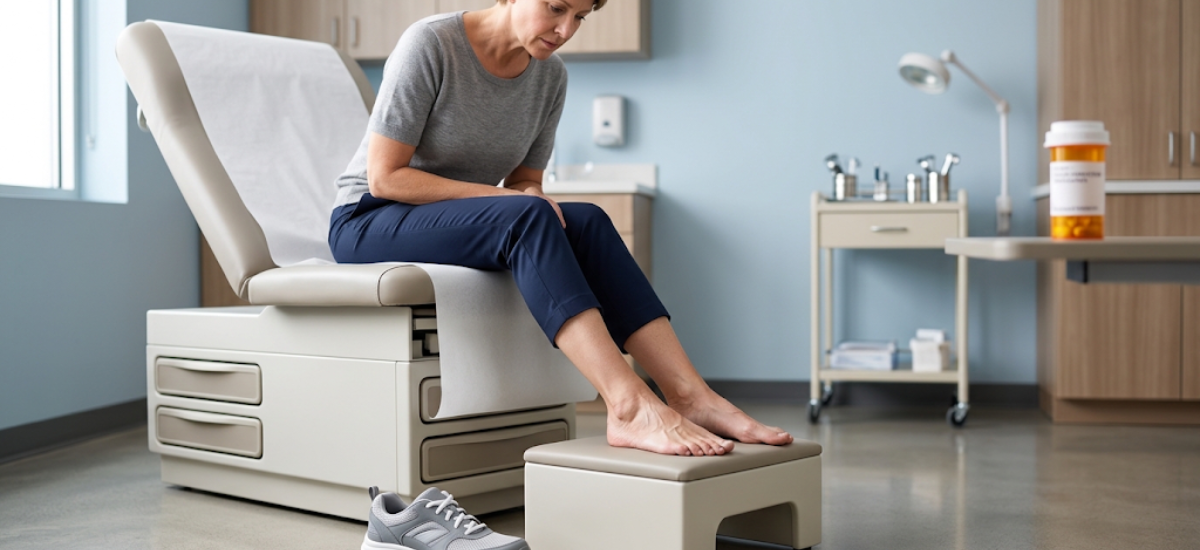
If you are taking Ozempic, Wegovy, Mounjaro, or any other GLP-1 medication, your feet are changing. Some of those changes are genuinely good news. Others are side effects nobody warned you about. And if you have diabetes, some of them carry risks that your prescribing physician may not have discussed at all.
Ozempic feet is not listed as an official side effect on any GLP-1 medication label. But podiatrists across the country, including at Sole Foot and Ankle in Valparaiso, IN, are seeing the foot consequences of rapid GLP-1-driven weight loss in clinic every week. Dr. Harpreet Minhas and our team provide expert diabetic foot care for patients throughout Northwest Indiana, and GLP-1 medications are now part of almost every diabetic foot care conversation we have.
This post gives you the full picture on what GLP-1 drugs do to your feet, both the benefits and the risks, and what to do about it.
How Popular Are GLP-1 Drugs Right Now
Before we get into the foot effects, it is worth understanding the scale of what is happening. Data from Truveta’s prescription tracking shows that as of March 2026, nearly 8 out of every 100 prescriptions in the United States were for GLP-1 receptor agonists. That represents the largest quarter-over-quarter increase recorded since 2019, with nearly 2.9 million patients prescribed a GLP-1 receptor agonist between January 2019 and March 2026.
Data presented at the American Diabetes Association’s 85th Scientific Sessions in 2025 showed that the number of Americans using incretin-based therapies, the drug class that includes semaglutide, increased by nearly 600% over the previous five years.
That growth trajectory makes the foot consequences of GLP-1 use a public health issue, not just a niche podiatric one. If you or someone you care for is on one of these medications, understanding what they do to your feet is genuinely important.
What Is Ozempic Feet
Ozempic feet is a term that emerged in 2026 to describe the foot-related changes that patients on GLP-1 medications report after significant weight loss. It is not an official medical diagnosis. As of mid-2026, no peer-reviewed study has specifically characterized Ozempic feet as a clinical entity. But what is happening in patients’ feet is real, clinically observable, and increasingly common in podiatric practices across the country.
The changes fall into three broad categories. Structural changes from fat pad loss. Mechanical changes from muscle mass reduction. And in diabetic patients specifically, important metabolic interactions that cut both ways.
The Fat Pad Problem
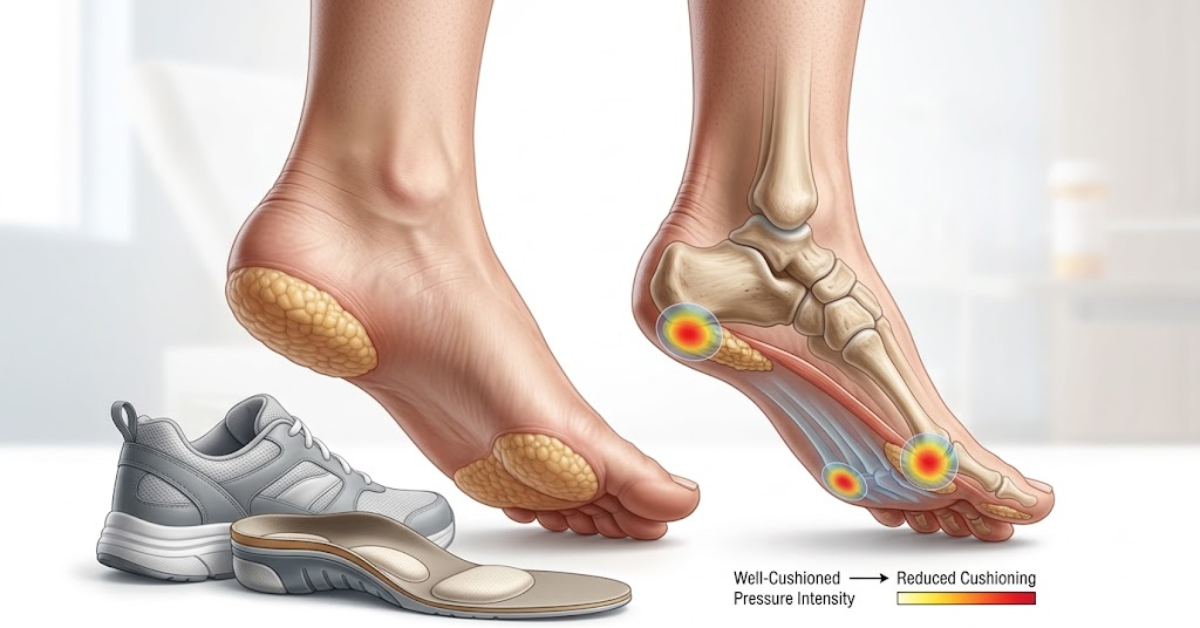
The single most common driver of Ozempic feet symptoms is plantar fat pad atrophy, the thinning of the natural cushioning layer on the sole of the foot.
Your foot has fat pads beneath the heel and the ball of the foot that act as shock absorbers for every step you take. These pads protect the bones and joints from the repetitive impact of walking and standing. When you lose weight rapidly, these fat pads can thin significantly, just as fat loss occurs in the face (Ozempic face) and other body areas.
When a patient loses weight quickly, the natural fat pads in their feet can diminish significantly. These fat pads serve as crucial shock absorbers, protecting bones and joints during walking and standing. The loss of fat from these areas can lead to increased pressure on bony prominences, causing pain, discomfort, and potential complications.
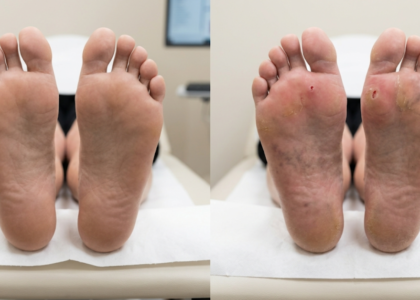
The result is heel pain, ball-of-foot pain, and a sensation of walking on bones rather than cushioning. Patients describe the feeling as stepping on pebbles or hard surfaces even on flat, smooth ground. The appearance changes too. The tops of the feet start to look bonier, with tendons and veins more prominent than before. The skin may appear loose or sagging on the feet and ankles.
Experts say the changes are often most noticeable on the tops of the feet, where fat loss can make veins and tendons appear more prominent. Some patients have also reported heel pain, aching, and a burning sensation in their feet.
Patients losing 40 pounds or more appear most susceptible to significant fat pad changes. Rapid weight loss compounds the problem because the skin and soft tissue cannot adapt as quickly as the fat disappears.
The Muscle Mass Question
GLP-1 drugs cause weight loss from both fat and lean mass. Early studies suggested lean mass, including muscle, made up 15 to 40% of total body weight lost during GLP-1 therapy. For your feet, this matters because the intrinsic foot muscles support your arches and maintain the stability and mechanics of every step.
However, a March 2026 study by Langer and colleagues published in Cell Reports Medicine found that weight loss on GLP-1 medications does not result in a disproportionate loss of muscle mass or function, particularly when patients maintain resistance training. That caveat is critical. Sedentary GLP-1 users who are not doing resistance training are precisely the group at greatest structural risk in the feet.
The practical implication is clear. If you are on a GLP-1 medication and not doing any strength training, your foot mechanics are changing in ways that may not be immediately painful but will compound over time. Your calf muscles, Achilles tendon loading, arch support, and ankle stability all depend on the muscle mass that GLP-1 therapy is reducing alongside fat.
The Shoe Problem
One of the most immediately practical consequences of Ozempic feet is that shoes that fit perfectly before GLP-1 therapy may no longer fit correctly after significant weight loss. The foot narrows and may shorten slightly as fat volume decreases. Shoes that previously felt supportive may slip at the heel or rub in new places.
For healthy patients, this is a manageable inconvenience. For diabetic patients with neuropathy, a poorly fitting shoe is a direct path to an undetected pressure sore, blister, or ulcer. The reduced sensation that neuropathy produces means the patient may not feel the new friction point until a wound has already formed.
If you have diabetes and have lost significant weight on a GLP-1 medication, your footwear needs a reassessment. What fit your foot before may be causing damage now.
The Benefits of GLP-1 Drugs for Diabetic Feet
Here is where the story genuinely changes. Because while Ozempic feet symptoms are real and worth managing, the overall picture of what GLP-1 drugs do for diabetic foot health is significantly positive, particularly for patients with established diabetic complications.
Better glycemic control means better healing. Studies show that semaglutide reduces HbA1c by 1.5 to 2%, which translates directly to better wound healing capacity, slower neuropathy progression, and reduced ulcer risk in diabetic patients.
Less body weight means less pressure. Every pound lost removes approximately 4 pounds of pressure from the feet during walking. For patients losing 30 to 60 pounds on GLP-1 therapy, the reduction in cumulative plantar load is significant and meaningfully reduces the mechanical stress that drives callus formation, pressure sores, and plantar fasciitis.
GLP-1 drugs reduce mortality after diabetic foot ulcers. This is the finding from the landmark nationwide study published in Diabetes Care in April 2026. The study analyzed 133,791 individuals with a first diabetic foot ulcer in France and found that GLP-1 receptor agonist use was independently associated with significantly lower one-year mortality. Among 133,791 individuals with incident DFU, 14.6% died within 1 year, and 3.5% underwent a major amputation. Of those amputated, 28.8% died within a year. Protective factors included lipid-lowering therapy, GLP-1 receptor agonists, and prior consultations with diabetologists, ophthalmologists, and podiatrists.
Critically, the survival benefit from GLP-1 receptor agonists was consistent even among patients who underwent major lower-limb amputation. These drugs are not just helping patients avoid wounds. They are helping patients survive the most serious diabetic foot complications when they occur.
The same study also confirmed what Sole Foot and Ankle has long emphasized: regular consultations with a podiatrist were independently associated with better survival outcomes following a diabetic foot ulcer. Seeing a podiatrist is not optional for diabetic patients. It is protective.
What Diabetic Patients on GLP-1 Drugs Need to Watch For
If you have diabetes and are taking Ozempic, Wegovy, Mounjaro, or any other GLP-1 medication, your foot care protocol needs to account for the specific risks these drugs introduce alongside their substantial benefits. Dr. Minhas recommends the following approach for every diabetic patient on a GLP-1 medication.
Daily foot inspection becomes even more critical. Fat pad loss creates new pressure points. Shoe fit may have changed. And your neuropathy means you cannot feel the damage these changes may be causing. Inspect both feet every single day, including between the toes and on the soles, for any redness, blistering, skin breakdown, or new pressure marks.
Have your footwear professionally reassessed. A shoe that was appropriate before significant weight loss may now be creating the very problems it was designed to prevent. At Sole Foot and Ankle, Dr. Minhas evaluates diabetic footwear at every visit and can prescribe therapeutic footwear when medically indicated.
Get your annual diabetic foot exam even if your feet feel fine. The 2026 Diabetes Care study confirmed that regular podiatric consultations are independently associated with improved survival outcomes after diabetic foot ulcers. Your feet may not be warning you about changes that a clinical examination would immediately identify.
Watch for any new foot wound promptly. A diabetic foot wound that develops in the context of new shoe fit issues or fat pad atrophy needs same-day professional evaluation. Do not wait.
What Non-Diabetic GLP-1 Users Need To Know
If you are taking a GLP-1 medication for weight management without a diabetes diagnosis, the foot concerns are real but less urgent. Here is what matters for you.
Expect some foot discomfort if you lose weight rapidly, particularly in the heel and ball of the foot. This is fat pad atrophy and it is proportional to how quickly and how much weight you lose.
Prioritize resistance training. The March 2026 Cell Reports Medicine study confirms that muscle mass loss is minimized when GLP-1 users maintain strength training. Keeping your intrinsic foot muscles, calves, and lower leg strength intact is the most effective way to protect your foot mechanics during GLP-1-driven weight loss.
Reassess your footwear. A foot that has lost significant volume may need a different shoe size, width, or support level than it did before. If you are experiencing new foot pain during or after GLP-1 therapy, that is a legitimate clinical symptom worth having evaluated.
Custom orthotics can compensate for fat pad loss. For patients experiencing significant pain from fat pad atrophy, custom orthotics with appropriate cushioning and pressure redistribution can meaningfully restore comfort and protect the structures that the fat pads were previously protecting.
How Sole Foot and Ankle Approaches GLP-1 Foot Care in Valparaiso, IN
At Sole Foot and Ankle, Dr. Minhas incorporates GLP-1 medication status into every diabetic foot care evaluation. Understanding that a patient is on semaglutide, tirzepatide, or another GLP-1 agent changes what we look for at each visit.
We assess for fat pad atrophy and new pressure points that may have developed as weight has changed. We evaluate footwear fit against the patient’s current foot volume, not the foot they had before starting medication. We screen for any new skin breakdown in areas where fat pad loss has reduced cushioning. And we coordinate with the patient’s endocrinologist and primary care physician to ensure the glycemic benefits of GLP-1 therapy are being fully realized for foot healing and ulcer prevention.
The 2026 Diabetes Care study identified regular podiatric consultations as one of only a handful of independently protective factors against one-year mortality following a diabetic foot ulcer. At Sole Foot and Ankle, that protection is what we provide for every diabetic patient in Northwest Indiana, including those whose foot care needs are evolving rapidly alongside their GLP-1 therapy.
Frequently Asked Questions About Ozempic Feet
H3: Will Ozempic feet go away if I stop the medication?
The structural changes associated with Ozempic feet, particularly fat pad atrophy, are related to the weight loss rather than the medication itself. If weight is regained after stopping the medication, some fat pad volume may return. However, if weight loss is maintained, the fat pad changes are likely to persist. Custom orthotics and appropriate footwear can manage the discomfort effectively regardless of whether the medication is continued.
H3: Is Ozempic feet dangerous if I have diabetes?
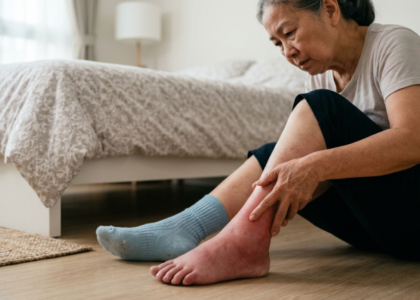
Yes, potentially. Diabetic patients with neuropathy cannot feel the pressure, friction, and tissue damage that fat pad loss and shoe fit changes create. This makes Ozempic feet a meaningful risk factor for diabetic foot ulcer formation in patients who are not receiving regular professional foot monitoring. Contact Sole Foot and Ankle for a comprehensive diabetic foot evaluation if you have diabetes and are on a GLP-1 medication.
H3: Should I see a podiatrist if I am on Ozempic or Wegovy?
Yes, particularly if you have diabetes. The 2026 nationwide Diabetes Care study confirmed that regular podiatric consultations are independently associated with improved survival following diabetic foot ulcers. For non-diabetic patients, a podiatric evaluation is recommended if you are experiencing new foot pain, heel discomfort, or shoe fit problems that developed after starting GLP-1 therapy.
H3: Can custom orthotics help with Ozempic feet pain?
Yes. Custom orthotics are one of the most effective interventions for fat pad atrophy-related pain. At Sole Foot and Ankle, orthotics are fabricated following a thorough gait analysis and 3D foot impression, providing precisely calibrated cushioning and pressure redistribution that compensates for the fat pad volume lost during GLP-1-driven weight loss.
H3: Are GLP-1 drugs overall good or bad for diabetic foot health?
The evidence says good, with important caveats. The metabolic benefits of GLP-1 therapy, including better glycemic control, weight reduction, and the independently demonstrated survival benefit in patients with diabetic foot ulcers, are substantial. The foot-structural risks of rapid weight loss are real but manageable with appropriate monitoring, footwear, and custom orthotics. The key is ensuring that diabetic patients on GLP-1 therapy are receiving regular podiatric monitoring so that the foot-structural risks are caught and managed before they become wounds.
If You Are on a GLP-1 Drug and Have Diabetes, Your Feet Need Expert Monitoring
GLP-1 medications are transforming diabetes and weight management. For your feet, they bring meaningful metabolic benefits and real structural challenges. Managing both requires a podiatrist who understands how these drugs interact with diabetic foot health and who can adapt your foot care plan as your body changes.
At Sole Foot and Ankle in Valparaiso, IN, Dr. Harpreet Minhas provides expert diabetic foot care for patients on GLP-1 medications throughout Northwest Indiana. Whether you are experiencing new foot pain, need a footwear reassessment, or simply want to make sure your feet are being properly monitored while your body changes on these powerful drugs, we are here to help.
📞 Call us today at +1 219-464-9588
📍 2308 Roosevelt Rd, Valparaiso, IN 46383
🔗 Book online at solefootdoc.com
Sole Foot and Ankle. One Step Ahead.