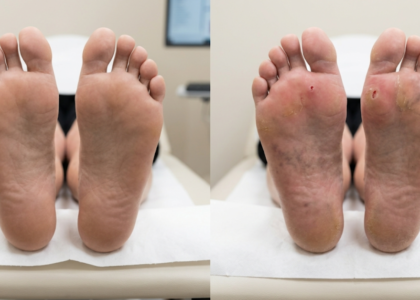


Your legs ache when you walk to the mailbox but feel fine once you sit down. Your feet are cold even when the rest of your body is warm. A small sore on your toe has been there for three weeks and is not improving. These are classic early signs of peripheral artery disease. You mention them to your doctor and hear the words “poor circulation.”
Poor circulation is not a diagnosis. It is a symptom. In many cases, it points to PAD. This progressive vascular condition affects more than 200 million people worldwide. Left unmanaged, it raises the risk of non-healing foot wounds, gangrene, and lower limb amputation.
At Sole Foot and Ankle in Valparaiso, IN, Dr. Harpreet Minhas screens every patient for peripheral artery disease at every diabetic foot exam. Catching reduced arterial blood flow early is one of the most effective steps we take to prevent limb-threatening infections and amputation. This post covers what peripheral artery disease is, why it threatens foot health, and which warning signs demand same-day attention.
What Is Peripheral Artery Disease?
Peripheral artery disease (PAD) is a progressive form of systemic atherosclerosis. It primarily affects older adults and people with diabetes, a smoking history, or chronic kidney disease. Arterial narrowing blocks blood flow to the lower extremities. Over time, the foot and lower leg receive less oxygen, fewer nutrients, and reduced immune support.
Mild cases cause cramping and cold feet. Severe cases produce non-healing wounds, gangrene, and amputation. The condition worsens silently for years before most patients notice anything serious.
That silence is the danger. Up to 50% of people with PAD have no symptoms. Significant arterial narrowing builds without warning. A wound or infection is often the first sign that blood flow can no longer support healing.
Why PAD Is a Foot Health Emergency for Diabetic Patients
For the general population, PAD is a serious cardiovascular condition. For patients with diabetes, it is a direct pathway to limb loss.
Diabetes increases the incidence of peripheral artery disease. It also accelerates progression and worsens severity. Patients with both diabetes and PAD face a high risk of major complications including amputation. Overall U.S. amputation rates have declined. But among patients with both conditions, rates have held steady or risen in high-risk groups.
Two destructive processes combine here. Diabetes impairs wound healing through neuropathy and immune dysfunction. Arterial disease cuts off the blood flow that healing requires. Together, they produce a foot that cannot feel injury and cannot heal it once it occurs.
A December 2025 ACC Scientific Statement on PAD in diabetes called for a modern, evidence-based approach starting with screening. It noted that amputation rates remain disproportionately high in this population. It also found that proven medical therapies are underutilized.
At Sole Foot and Ankle, we screen every diabetic patient for peripheral artery disease at every visit. We do not wait for a wound to appear. It is a core part of our preventive diabetic foot care framework.
PAD vs. Neuropathy: Understanding the Difference
Many patients confuse PAD with diabetic peripheral neuropathy. Both affect the feet. Both raise the risk of serious complications. But they involve completely different processes and require different treatments.
Peripheral Artery Disease is a vascular problem. The arteries supplying blood to the foot are narrowed or blocked, reducing blood flow, oxygen delivery, and immune cell transport to the foot tissues. PAD causes pain with activity that resolves with rest (claudication), cold feet, shiny skin, absent or diminished foot pulses, and wounds that fail to heal due to inadequate circulation.
Peripheral Neuropathy is a nerve problem. The peripheral nerves serving the foot are damaged by chronic high blood glucose, reducing the ability to feel pain, temperature, and pressure. Neuropathy causes numbness, tingling, burning, or loss of sensation in the feet, and contributes to foot deformities through muscle weakness.
Many diabetic patients have both conditions at the same time. Neuropathy masks the ischemic pain that poor arterial flow would otherwise produce. The result is a foot that cannot feel injury and cannot heal it. That combination carries the highest risk of non-healing wounds and amputation.
Warning Signs of Poor Leg Circulation You Should Never Ignore
The classic symptom is leg pain during walking that clears after a few minutes of rest. Doctors call this intermittent claudication. It can affect the calf, thigh, hip, or buttock. But up to 4 in 10 people with PAD feel no leg pain at all.
Peripheral artery disease produces many other signs in the feet and lower legs. Contact Sole Foot and Ankle for an evaluation if you notice any of the following:
Symptoms you may feel:
- Cramping, aching, or fatigue in the calf, thigh, or buttock during walking that relieves within a few minutes of rest (intermittent claudication)
- Burning or aching pain in the foot or toes at rest, particularly at night or when lying flat (rest pain, indicating advanced PAD)
- Cold or numb feet that do not warm up normally
- A sensation of heaviness or weakness in the legs during activity
Signs you may see:
- Skin on the feet or lower legs that appears shiny, smooth, and tightly stretched
- Loss of hair on the lower legs and feet
- Toenails that are thickened, slow-growing, or discolored
- Skin that is pale, bluish, or dusky in color
- Decreased or absent pulses in the feet
- Wounds or sores on the toes, feet, or lower legs that are slow to heal or not healing at all
The most urgent warning sign: A foot or toes that are cold, pale, bluish, or dark with sudden severe pain is a sign of acute limb ischemia, a vascular emergency requiring immediate care. Do not wait for a scheduled appointment. Go to the emergency room immediately.
How Blocked Arteries Cause Foot Wounds That Won’t Heal
The link between blocked arteries and non-healing wounds is direct. Reduced blood flow starves the wound of oxygen, nutrients, and immune cells. The wound cannot repair itself.
A minor cut or blister heals in days for a healthy patient. In a patient with significantly narrowed arteries, the same wound can remain open for months. Bacteria colonize it. The infection spreads. It reaches deeper tissue and eventually bone. Surgery becomes unavoidable.
This is why every diabetic foot wound that won’t heal needs vascular assessment. Dr. Minhas checks pedal pulses on every patient with a non-healing wound. When he suspects arterial disease, he coordinates a full vascular workup without delay.
Who Is Most at Risk for Developing PAD?
Knowing your risk helps you seek screening before symptoms appear. The strongest risk factors for PAD are:
- Diabetes — peripheral arterial disease is 3 to 4 times more prevalent and severe in diabetic patients compared to non-diabetic ones
- Smoking — smoking and diabetes are two of the strongest risk factors for PAD, with people in these groups two to four times more likely to develop PAD than those who do not smoke or have diabetes
- Age over 65 — the prevalence of peripheral artery disease increases significantly with age
- High blood pressure — hypertension accelerates the atherosclerotic process that narrows arteries
- High cholesterol — elevated LDL cholesterol drives the plaque buildup that obstructs arterial flow
- Chronic kidney disease — impaired kidney function is independently associated with accelerated arterial disease
- Prior heart attack or stroke — PAD is a manifestation of the same systemic atherosclerosis that causes coronary and cerebrovascular disease
- Family history of cardiovascular disease — genetic predisposition to atherosclerosis increases PAD risk
Diabetic patients who also smoke, have high blood pressure, or have high cholesterol face the highest risk. Dr. Minhas screens all of these patients at every visit without exception.

How Dr. Minhas Screens for PAD at Sole Foot and Ankle
Dr. Minhas builds vascular screening into every diabetic foot exam at Sole Foot and Ankle. Here is how the evaluation works.
Pedal Pulse Assessment
Dr. Minhas palpates the dorsalis pedis and posterior tibial arteries at every visit. Absent or diminished pulses are a red flag. They trigger immediate further testing.
Ankle-Brachial Index (ABI) Testing
The ABI compares blood pressure at the ankle to blood pressure in the arm. A ratio of 0.9 or less confirms arterial disease. A ratio below 0.4 signals severe, limb-threatening ischemia. The test is non-invasive, quick, and performed in our Valparaiso office. Dr. Minhas uses the result to decide how urgently to escalate care.
Advanced Vascular Imaging
When revascularization is on the table, Dr. Minhas coordinates referral for duplex ultrasound, CT angiography, or formal angiography. These studies map the blockages and guide the vascular surgeon’s approach.
Vascular Surgery Coordination
When Dr. Minhas identifies significant arterial disease in a patient with a non-healing wound, he contacts vascular surgery colleagues directly. Restoring blood flow is often a prerequisite to healing. It is also a core part of our limb salvage commitment at Sole Foot and Ankle.
Steps You Can Take to Slow the Progression of PAD
Advanced PAD requires medical or surgical management. But patients play a meaningful role in slowing its progression. Start with these steps.
Lifestyle modifications that make a real difference:
- Stop smoking immediately and completely — smoking is the single most modifiable risk factor for PAD progression
- Control blood glucose tightly — elevated blood sugar accelerates atherosclerosis and worsens PAD severity in diabetic patients
- Manage blood pressure and cholesterol with prescribed medications as directed
- Walk regularly as tolerated — supervised exercise therapy improves collateral blood flow and claudication symptoms
- Follow a heart-healthy diet low in saturated fats and refined sugars
- Maintain a healthy body weight
Daily foot care for patients with peripheral artery disease:
- Inspect feet daily for any cuts, blisters, sores, or skin changes
- Keep feet clean and moisturized but avoid soaking, which can macerate skin
- Never walk barefoot, including inside the house
- Wear properly fitted shoes with no tight pressure points
- Keep feet warm but avoid direct heat sources such as heating pads, which can cause burns in feet with reduced sensation
- Contact Sole Foot and Ankle immediately for any foot wound, regardless of size
Why Sole Foot and Ankle Is the Right Partner for Your Vascular Foot Health
Dr. Minhas does not treat foot wounds in isolation. He evaluates the vascular status of every patient and builds a full limb preservation plan around the complete clinical picture. Vascular screening is woven into every aspect of our diabetic foot care program at Sole Foot and Ankle.
The December 2025 ACC Scientific Statement on PAD in diabetes names podiatry as a key member of the multidisciplinary care team. People with diabetes benefit from teams that include cardiology, endocrinology, podiatry, primary care, vascular medicine, and vascular surgery working together.
That multidisciplinary model is exactly how Sole Foot and Ankle approaches every high-risk diabetic patient in Valparaiso, IN and throughout Northwest Indiana.
Frequently Asked Questions About PAD and Foot Health
Can PAD be cured?
PAD cannot be fully reversed. But its progression slows significantly with lifestyle changes, medication, and revascularization when appropriate. The goals are clear: reduce cardiovascular risk, relieve symptoms, prevent wounds, and preserve the limb. Early treatment produces the best long-term results.
What does poor leg circulation feel like in the feet?
PAD typically produces cramping or fatigue in the calf during walking that clears with rest. In more advanced cases, a burning ache develops in the foot or toes at rest, especially at night. Many diabetic patients feel little or no pain despite significant PAD. This is why regular professional screening matters more than waiting for symptoms.
How is PAD different from a blood clot?
PAD develops gradually from plaque buildup over years. A blood clot is an acute event that blocks a vessel suddenly. A clot causes sudden severe pain, pallor, and coldness and requires emergency care. PAD builds slowly over months to years. Both need medical evaluation but at different levels of urgency and with different treatments.
Should I see a podiatrist or a vascular doctor for PAD?
Both. Dr. Minhas handles foot-specific assessment, wound care, and protective footwear. A vascular specialist manages the arterial disease through medication, supervised exercise, endovascular procedures, or bypass surgery. At Sole Foot and Ankle, Dr. Minhas coordinates directly with vascular colleagues to make sure every patient gets both components of care.
Can blocked arteries cause amputation even without a wound?
In severe cases, yes. Critical limb-threatening ischemia can cause rest pain and tissue death from oxygen deprivation alone without any wound present. In most cases though, amputation follows a wound that forms in a foot with inadequate blood flow to heal it. Regular diabetic foot exams that include vascular screening give patients the chance to catch peripheral artery disease before a wound develops. That window is when revascularization and protective measures are most effective.
Do Not Ignore These Warning Signs. Call Sole Foot and Ankle Today.
Cold feet, leg cramps that stop when you rest, shiny skin on your lower legs, or a wound that refuses to close are not normal signs of aging. They are warning signs of peripheral artery disease that deserve professional evaluation without delay.
At Sole Foot and Ankle in Valparaiso, IN, Dr. Harpreet Minhas provides comprehensive vascular assessment and foot care for patients throughout Northwest Indiana. Whether you have diabetes and are at high risk for PAD or you have noticed warning signs and want answers, we are here to help.
📞 Call us today at +1 219-464-9588
📍 2308 Roosevelt Rd, Valparaiso, IN 46383
🔗 Book online at solefootdoc.com
Sole Foot and Ankle. One Step Ahead.