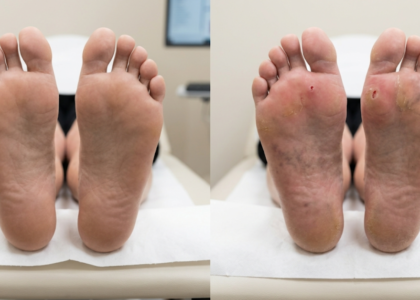


Your foot is swollen, red, and warm. It does not hurt, or at least not as much as you would expect given how it looks. You have not twisted it. You have not injured it in any way you can remember. And your doctor initially tells you it might be cellulitis, gout, or a sprain. It might not be any of those things. It might be Charcot foot, and if it is, the next few weeks of care will determine whether you keep a structurally intact limb or develop a permanent, deforming collapse of your foot architecture that dramatically increases your risk of ulceration, infection, and amputation.
At Sole Foot and Ankle in Valparaiso, IN, diabetic foot care is our practice’s primary focus. Dr. Harpreet Minhas and our team are experienced in recognizing, diagnosing, and treating Charcot foot at every stage, including the acute presentation that so many clinicians miss. This post explains what Charcot foot is, why it is so frequently misdiagnosed, what the stages involve, and what Charcot foot treatment in Valparaiso, IN looks like from the earliest possible intervention through surgical reconstruction.
What Is Charcot Foot?
Charcot foot, medically known as Charcot neuroarthropathy (CN) or Charcot neuro-osteoarthropathy (CNO), is a serious and progressive complication of peripheral neuropathy that causes the bones, joints, and soft tissue structures of the foot and ankle to break down from the inside out.
It occurs most commonly in patients with diabetes, though it can affect anyone with severe peripheral neuropathy regardless of cause. Because neuropathy eliminates the pain signals that would normally prompt a person to rest and protect an injured area, patients with Charcot foot continue walking on a foot whose bones are fracturing and whose joints are dislocating. Every step causes more destruction. Over time, the progressive collapse of the foot’s bony architecture produces the characteristic “rocker bottom” deformity, a convex, rounded foot sole that creates extreme ulceration risk on the plantar surface.
Charcot neuro-osteoarthropathy is a rare but devastating complication of diabetes associated with high rates of morbidity, and many non-foot specialists are unaware of it, resulting in missed and delayed diagnosis.
That gap in awareness has real consequences for patients. Understanding Charcot foot, and seeking expert charcot foot treatment at the earliest possible stage, is one of the most important things a diabetic patient with neuropathy can do to protect their limb.
How Common Is Charcot Foot and Why Is Charcot Foot Treatment So Often Delayed?
Charcot foot affects an estimated 0.04% to 0.53% of people with diabetes. While those numbers may seem small, given the scale of the diabetes epidemic they translate to a significant number of patients, with an annual incidence that has been compared to twice that of Hodgkin’s lymphoma.
The bigger clinical problem is not prevalence. It is misdiagnosis.
One in four cases of acute Charcot foot is misdiagnosed, most often as cellulitis, gout, deep venous thrombosis, or a minor sprain, which delays diagnosis by an average of seven months.
More recent systematic reviews put that figure even higher. A systematic review found that the average time from symptom onset to a final diagnosis of Charcot neuroarthropathy was 84.8 days, and 48% of patients experienced a misdiagnosis. A second systematic review found similar results, with a duration from symptom onset to correct diagnosis of 86.9 days and 53.2% of cases initially misdiagnosed.
In one retrospective cohort study, Charcot misdiagnosis occurred in 63% of participants, and signs and symptoms consistent with acute Charcot foot were present for a median of two months prior to the patient presenting to a specialist foot clinic. The affected foot was most commonly misdiagnosed as cellulitis in 47.1% of cases.
Every week of delayed or incorrect treatment during the acute phase is a week of additional bone destruction and joint collapse. This is why Sole Foot and Ankle specifically screens for Charcot neuroarthropathy in every diabetic patient presenting with a hot, swollen, red foot, regardless of whether a traumatic cause is identified.
What Causes Charcot Foot?
Charcot foot develops from the intersection of three pathological processes that diabetes creates in the foot simultaneously.
Peripheral Neuropathy
Severe sensory neuropathy removes the pain signal that would normally protect a foot from overuse and injury. Without pain, a patient continues to bear weight on a foot whose bones are already under pathological stress, driving progressive fracture and joint destruction with every step.
Increased Bone Blood Flow and Bone Resorption
Autonomic neuropathy dysregulates blood flow to the foot, causing increased perfusion to bone tissue. This paradoxically accelerates bone resorption, weakening the bone mineral density and making the bones of the foot and ankle abnormally susceptible to fracture under normal loading forces.
Repetitive Trauma Without Protective Response
Because the patient cannot feel injury occurring, minor repetitive traumas accumulate without triggering the rest and offloading that would normally interrupt the cycle. The result is a progressive cascade of microfractures, joint dislocations, and soft tissue disruption that worsens with every step taken on the affected foot.
The Three Stages of Charcot Foot and Why Timing of Charcot Foot Treatment Matters
Understanding the stages of Charcot foot is essential to understanding why the timing of charcot foot treatment matters so profoundly.
Stage 1 — Development (Acute Phase)
This is the stage at which charcot foot treatment is most effective and structural preservation is most achievable. The foot is warm, red, and swollen, often dramatically so, with skin temperature measurably higher than the opposite foot. X-rays may appear normal or show only subtle changes in the early acute phase, which is one reason the condition is so frequently missed at this stage. MRI is significantly more sensitive for detecting early bone marrow edema and stress changes before they progress to visible fractures.
The IWGDF 2023 guidelines are clear: any person with diabetes, neuropathy, and intact skin who presents with a unilateral red, warm, swollen foot should be considered to have active Charcot neuro-osteoarthropathy until proven otherwise. Immediate offloading is the most critical intervention at this stage.
Stage 2 — Coalescence (Subacute Phase)
In the coalescence stage, the acute inflammation begins to subside and the bone fragments start to consolidate. X-ray changes become more apparent, showing fractures, fragmentation, and early joint changes. The foot begins to cool and swelling reduces. This stage marks the transition from active destruction to healing, but continued offloading remains essential to prevent the ongoing mechanical forces from driving further collapse.
Stage 3 — Consolidation (Chronic Phase)
The consolidation stage represents the end of the active destructive process. Bone healing and remodeling occur, and the foot stabilizes in whatever architecture it has developed during the previous stages. If adequate offloading was maintained throughout the acute and subacute phases, the foot may consolidate into a relatively functional shape. If treatment was delayed or inadequate, the foot consolidates into a fixed deformity, most commonly the rocker-bottom shape, that creates permanent ulceration risk on the plantar surface.
Without prompt charcot foot treatment, the condition often results in the development of rigid foot deformities, increasing the risk of major lower extremity amputation by 15 to 40 fold.
Recognizing the Warning Signs That Require Immediate Charcot Foot Treatment
The most important single action a diabetic patient with neuropathy can take is to know the warning signs of acute Charcot foot and act on them immediately. Contact Sole Foot and Ankle the same day if you notice:
- A foot or ankle that is significantly more swollen than usual, particularly if it develops without an obvious traumatic cause
- Redness covering a large area of the foot or ankle, not just around a specific wound or sore
- Warmth in the foot that is noticeably greater than the opposite foot when you touch both simultaneously
- A foot that looks different from normal, whether wider, rounder, or collapsed in the arch area
- Any of the above signs in a diabetic patient with known neuropathy, regardless of the absence of pain
The absence of pain is not reassurance. In the context of diabetic neuropathy, a painless hot swollen foot is a medical urgency, not a sign that nothing serious is happening.
The annual diabetic foot exam at Sole Foot and Ankle specifically includes screening for early Charcot changes, including temperature comparison between feet, assessment of structural changes, and identification of patients at highest risk for developing the condition.

Charcot Foot Treatment at Sole Foot and Ankle in Valparaiso, IN
The approach to charcot foot treatment in Valparaiso, IN at Sole Foot and Ankle is staged to match the phase of the condition. Early stage disease and late stage reconstructive needs require very different interventions, and the overarching goal throughout is the same: preserve a plantigrade, stable, ulceration-free foot that allows the patient to walk independently.
Immediate Offloading — The Most Critical Component of Charcot Foot Treatment
The single most important component of acute charcot foot treatment is immediate, complete offloading of the affected foot. The IWGDF guidelines recommend the prompt initiation of knee-high immobilization and offloading in any case of suspected active Charcot neuro-osteoarthropathy, while other diagnostic tests are conducted to confirm or exclude the diagnosis. A non-removable knee-high device, specifically total contact casting, is considered the gold standard for charcot foot treatment.
Total contact casting distributes load evenly across the entire foot and lower leg, eliminating the focal pressures that drive continued bone destruction. It is used even before a confirmed diagnosis in cases of high clinical suspicion, because the cost of delaying offloading by days or weeks while awaiting imaging confirmation is measured in bone destruction that cannot be undone.
The median duration of total contact casting for resolution of acute Charcot foot in one retrospective cohort was 4.3 months. Patients should expect a significant period of immobilization, and Dr. Minhas will guide the transition from casting to a Charcot Restraint Orthotic Walker (CROW) boot and eventually to custom footwear as the condition progresses through consolidation.
Diagnostic Imaging for Charcot Foot Treatment Planning
The ADA’s 2026 Standards of Care state that foot and ankle X-rays should be performed in all individuals presenting with clinical findings of a warm, swollen, red foot and neuropathy. Early diagnosis and treatment of Charcot neuroarthropathy is of paramount importance in preventing deformities and instability that can lead to ulceration and amputation.
When X-rays are normal or inconclusive in the setting of high clinical suspicion, Dr. Minhas coordinates MRI imaging, which detects the bone marrow edema of early Charcot foot before fractures become visible on plain X-ray.
Custom Diabetic Orthotics and Therapeutic Footwear
As the Charcot foot progresses through coalescence and consolidation, the transition to appropriately designed custom orthotics and therapeutic footwear becomes the cornerstone of long-term management. Those with significant deformities, as in Charcot joint disease, may require custom-made footwear. Custom diabetic orthotics for Charcot feet are specifically designed to accommodate the altered foot architecture, redistribute plantar pressure away from deformity-related prominences, and prevent the ulceration that consolidated Charcot deformity creates.
Monitoring and Glycemic Optimization
Tight glycemic control is an important systemic component of charcot foot treatment. Elevated blood glucose accelerates bone resorption and impairs healing throughout the acute and subacute phases. Dr. Minhas coordinates closely with the patient’s endocrinologist and primary care physician to ensure that systemic diabetes management is optimized alongside the local foot care.
Surgical Charcot Foot Treatment — Reconstruction and Limb Salvage
When Charcot foot has progressed to a fixed, rigid deformity that cannot be adequately managed with footwear and orthotics, or when recurrent ulceration over the deformity creates a cycle of wound formation and infection, surgical reconstruction becomes the most appropriate path forward.
For recalcitrant deformities or for recurrent ulcerations not amenable to conservative footwear therapy alone, appropriate surgical reconstruction by an experienced diabetic foot surgeon should be considered.
Surgical charcot foot treatment at Sole Foot and Ankle may include exostectomy, the removal of prominent bony projections creating ulceration risk; arthrodesis, selective fusion of destroyed joints to create a stable, plantigrade foot architecture; and reconstructive procedures to restore the foot to a shape that can be protected with footwear and orthotics.
Surgical charcot foot treatment is complex and carries meaningful risks in diabetic patients with neuropathy and peripheral arterial disease. Dr. Minhas coordinates pre-surgical vascular assessment, works closely with vascular surgery colleagues when revascularization is needed to support surgical healing, and plans reconstruction with the specific goal of limb salvage and functional preservation.
Can Charcot Foot Treatment Reverse the Damage?
This is one of the most common questions patients ask when they first receive a Charcot foot diagnosis. The honest answer is that it depends entirely on how early charcot foot treatment begins.
In the acute Stage 1 phase, when offloading is initiated before significant structural destruction has occurred, many patients achieve consolidation with a foot that retains near-normal architecture and function. The condition is arrested, the bones heal, and with appropriate long-term footwear and orthotic management the patient can walk and live normally.
In the late Stage 3 chronic phase, when the deformity is fixed and the rocker-bottom shape has consolidated, the structural changes themselves cannot be fully reversed. What can be achieved is a stable, plantigrade foot through surgical reconstruction, custom orthotic management, and careful wound prevention that allows the patient to maintain mobility and avoid amputation.
The single most important factor in outcome is time to diagnosis and charcot foot treatment. Every week of untreated acute Charcot foot is a week of additional structural destruction that reduces the achievable outcome.
Charcot Foot Treatment, Limb Salvage, and the Stakes of Delayed Diagnosis
The consequences of missed or delayed Charcot foot diagnosis are well documented in the clinical literature. Amputation rates associated with Charcot neuroarthropathy have been estimated at 15%, with a two-year mortality rate of 18.6%, with multiple studies showing an increased rate of complications in patients with delayed or missed diagnosis.
At Sole Foot and Ankle, limb salvage is the primary mission of our diabetic foot care program. When a patient presents with a hot, swollen, red foot, we do not tell them to wait and see. We evaluate for Charcot neuroarthropathy immediately, initiate offloading without delay, and coordinate the full diagnostic and therapeutic response the condition demands.
The difference between a diabetic patient who receives accurate charcot foot treatment in Valparaiso, IN within days of their first symptoms and one who is misdiagnosed for seven months can be measured in foot architecture, ulceration risk, and ultimately in whether amputation becomes necessary.
Frequently Asked Questions About Charcot Foot Treatment
What does Charcot foot feel like?
This is precisely what makes Charcot foot so dangerous. Because it develops in patients with significant peripheral neuropathy, it often causes little to no pain despite producing dramatic swelling, redness, and warmth. Many patients describe mild aching or discomfort at most. The foot looks far worse than it feels, and this mismatch between appearance and pain level is one of the most important red flags for Charcot neuroarthropathy in a diabetic patient.
How long does charcot foot treatment take?
The acute offloading phase of charcot foot treatment typically lasts four to six months, though individual timelines vary based on the severity of bone involvement and the patient’s overall health. Total contact casting is maintained until clinical signs of the acute phase, primarily warmth and swelling, have resolved and imaging confirms consolidation. Long-term management with custom orthotics and therapeutic footwear continues indefinitely to protect the consolidated foot architecture and prevent ulceration.
Can I walk on a Charcot foot?
Not without a protective offloading device during the acute phase. Walking on an unprotected Charcot foot during the acute stage drives the bone destruction and joint collapse that produces permanent deformity. Once the acute phase has resolved and consolidation is confirmed, a carefully supervised return to weight-bearing in appropriate footwear is guided by Dr. Minhas based on imaging and clinical findings.
Is Charcot foot the same as a stress fracture?
They share some features but are distinct conditions. A stress fracture is a single crack in a bone from repetitive loading. Charcot neuroarthropathy involves a widespread pathological process affecting multiple bones and joints simultaneously, driven by the combination of neuropathy, increased bone blood flow, and unprotected repetitive trauma. The management approaches are also different. Charcot foot requires prolonged total contact casting and long-term orthotic management well beyond what a stress fracture typically needs.
Who is most at risk for developing Charcot foot and needing charcot foot treatment?
The highest-risk patients are those with long-standing diabetes, typically more than ten years of duration, significant peripheral neuropathy with loss of protective sensation, poor glycemic control reflected in elevated HbA1c, and a history of prior diabetic foot ulcers. Regular diabetic foot exams at Sole Foot and Ankle include specific assessment for neuropathy severity and Charcot risk factors, allowing Dr. Minhas to identify high-risk patients and ensure they know exactly what warning signs to watch for and act on immediately.
Do Not Wait. If Your Foot Is Hot, Swollen, and Red, Call Us Today for Charcot Foot Treatment.
A hot, swollen, red foot in a diabetic patient with neuropathy is a potential Charcot foot emergency until proven otherwise. The window for achieving the best possible charcot foot treatment outcome is measured in days, not months. Do not wait for a scheduled appointment. Do not accept a diagnosis of cellulitis or gout without a podiatric evaluation that specifically considers Charcot neuroarthropathy.
At Sole Foot and Ankle in Valparaiso, IN, Dr. Harpreet Minhas provides expert charcot foot treatment for diabetic patients throughout Northwest Indiana, from same-day acute evaluation and offloading through long-term orthotic management and surgical reconstruction when needed. Same-day appointments are available for diabetic patients with acute foot concerns.
📞 Call us today at +1 219-464-9588
📍 2308 Roosevelt Rd, Valparaiso, IN 46383
🔗 Book online at solefootdoc.com
Sole Foot and Ankle. One Step Ahead.