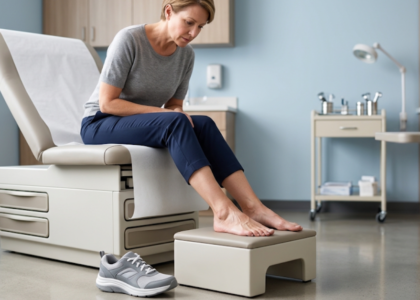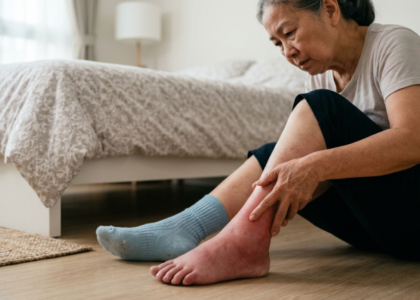


You may have come across the term “limb salvage” in a hospital, a specialist’s office, or while searching for answers online. But what does it actually mean, and why does it matter for you or someone you care about? For patients dealing with non-healing wounds, serious infections, or diabetic foot complications, limb salvage is not just medical language. It is often the decision that determines whether a patient keeps their foot and the independence that comes with it.
At Sole Foot And Ankle in Valparaiso, Indiana, limb salvage is a core focus of the practice. Dr. Harpreet Minhas, DPM, works with patients across Northwest Indiana who are facing serious lower limb conditions, combining advanced wound care expertise with a genuine commitment to preserving each patient’s quality of life.
If you have been told a wound is not healing, that circulation to your foot is at risk, or that amputation may be a possibility, this post is for you. Understanding what limb salvage involves can help you ask better questions, seek the right care sooner, and give yourself the best possible chance at a positive outcome.
What Is Limb Salvage?
Limb salvage is a specialized area of podiatric medicine dedicated to treating serious conditions that place the lower extremity at risk. The goal is to preserve the foot and leg whenever medically possible, using every available tool to prevent amputation.
It is important to understand that limb salvage is not a single procedure or treatment. It is a comprehensive, coordinated approach to care that may involve wound treatment, infection control, surgical intervention, offloading, vascular assessment, and ongoing monitoring over weeks or months. Each patient’s situation is different, and treatment is tailored accordingly.
What Conditions Make Limb Salvage Necessary?
Several conditions can place the lower limb at serious risk:
- Diabetic foot ulcers that fail to heal despite standard treatment
- Deep tissue infections or osteomyelitis, which is a bone infection
- Peripheral arterial disease that reduces blood flow to the feet
- Peripheral neuropathy leading to wounds that go unnoticed
- Charcot foot deformity, a progressive weakening of the bones of the foot
- Traumatic injuries with significant soft tissue damage
In many cases, these conditions develop gradually. A small blister, a minor cut, or a patch of dry cracked skin can worsen quickly, particularly for patients with diabetes or poor circulation. That is why recognizing warning signs early and seeking specialized care can make all the difference.
Who Is Most at Risk?
Patients with diabetes face the highest risk. The American Diabetes Association estimates that between 15 and 25 percent of people with diabetes will develop a foot ulcer at some point in their lifetime. Without prompt and appropriate care, a significant number of those ulcers can progress to the point where amputation becomes a consideration.
Patients with peripheral arterial disease, peripheral neuropathy, end-stage renal disease, or a history of previous foot wounds also face elevated risk. For these individuals, access to specialized limb salvage expertise can be genuinely life-changing.
How Limb Salvage Treatment Works
Effective limb salvage begins with a thorough clinical evaluation. This includes assessing the wound itself, the health of the surrounding tissue, blood supply to the area, signs of infection, and the patient’s overall medical history. From there, a personalized treatment plan is developed.
Advanced Wound Care
Wound care is the foundation of any limb salvage plan. This involves thorough wound cleaning, removal of dead or infected tissue through a process called debridement, and the application of specialized dressings that support healing from the inside out.
The frequency of wound care visits and the specific dressings used will depend on the wound’s size, depth, infection status, and how the patient’s body is responding to treatment. Careful, consistent monitoring allows the care team to adjust the approach as healing progresses.
Offloading Techniques
For wounds located on the bottom of the foot, reducing pressure on the wound site is critical. Continued walking or weight-bearing on an unprotected ulcer can prevent healing entirely, no matter how well the wound is being treated locally.
Depending on the wound and the patient’s lifestyle, offloading options may include:
- Specialized diabetic footwear or cushioned offloading shoes
- Total contact casts applied by a podiatric specialist
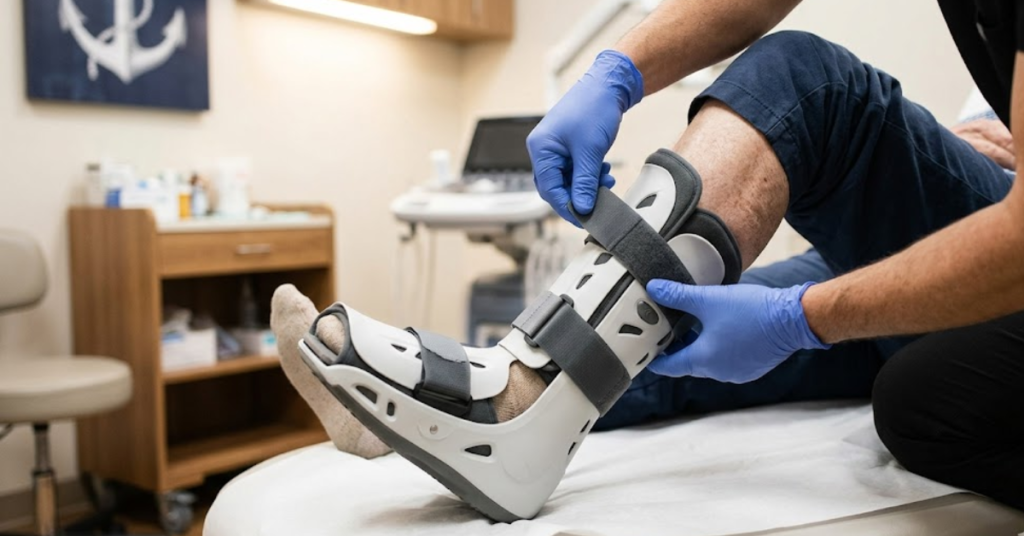
- Removable cast walkers or controlled ankle motion boots
- Custom orthotics as part of long-term foot protection after healing
Infection Management
Infections are one of the most dangerous complications a patient with a foot wound can face. When bacteria enter a wound, particularly in a patient with reduced blood supply or compromised immune function, they can spread rapidly through soft tissue and into bone.
Effective infection management may involve wound cultures to identify the specific bacteria present, targeted antibiotic therapy, and surgical debridement to remove infected tissue before it spreads further. In more serious cases, hospitalization may be required for intravenous antibiotics or urgent surgical care.
Surgical Options
When wound care and infection management alone are not sufficient, surgical intervention may be necessary to preserve the limb. Surgical options within a limb salvage plan may include debridement under general or regional anesthesia, skin grafting, soft tissue reconstruction, or procedures to address bone deformity or remove infected bone.
At Sole Foot And Ankle, Dr. Minhas brings podiatric surgical expertise to complex cases, always with a focus on preserving as much function as possible while giving the patient the best chance at a full recovery. Learn more about our foot surgery services in Valparaiso.
The Connection Between Diabetes and Limb Loss
Diabetes and lower limb amputation are closely linked, and understanding that connection is an important part of understanding why limb salvage matters so much. Elevated blood sugar damages both the blood vessels and the nerves of the lower limb over time, creating a situation where small injuries can become large problems faster than most patients expect.
According to the Centers for Disease Control and Prevention, more than 100,000 lower limb amputations related to diabetes occur in the United States every year. The overwhelming majority of those amputations are preceded by a foot ulcer. That means the window for intervention, the point at which limb salvage can change the outcome, often exists long before the situation becomes critical.
Early, specialized diabetic wound care in Valparaiso and across Northwest Indiana is one of the most powerful tools available for preventing amputation in patients with diabetes. Patients who are seen regularly by a podiatrist with experience in diabetic foot management are significantly less likely to experience a serious complication.
The Role of Neuropathy in Limb Loss
Peripheral neuropathy reduces or completely eliminates sensation in the feet. A patient with neuropathy can develop a wound, wear a shoe that creates friction, or step on a sharp object and feel nothing at all.
By the time the wound is noticed, it may already be infected or significantly deeper than it appears on the surface. This is why routine foot examinations are so important for patients living with neuropathy. A podiatrist can identify early-stage problems before they escalate into a limb-threatening situation.
Why Saving a Limb Matters Beyond the Foot
The impact of amputation extends far beyond the physical loss of a limb. Research has consistently shown that lower extremity amputation is associated with significant declines in overall health, reduced mobility, increased cardiovascular risk, depression, and in some patient populations, reduced life expectancy.
Preserving a limb through successful limb salvage supports a patient’s ability to walk, exercise, engage in daily activities, and maintain independence. These benefits have meaningful downstream effects on cardiovascular health, mental well-being, and overall quality of life that can last for years.
Studies have also shown that patients who preserve their limb through early intervention tend to have significantly better long-term outcomes compared to those who undergo amputation. The goal is never simply to save a foot. The goal is to protect a patient’s ability to live fully and on their own terms.
Limb Salvage Care at Sole Foot And Ankle in Valparaiso, IN
At Sole Foot and Ankle, limb salvage is not a last resort. It is a priority from the moment a patient presents with a complex wound or a condition that places their limb at risk.
Dr. Harpreet Minhas provides comprehensive wound care, infection management, and podiatric surgical expertise for patients across Valparaiso and Northwest Indiana. Every patient is evaluated as an individual, with a treatment plan built around their specific wound, their health history, and their personal goals for recovery.
The approach here is both clinical and compassionate. Patients who arrive with non-healing wounds, diabetic foot ulcers, or serious infections are not seen as isolated cases. They are seen as people whose independence, mobility, and quality of life are worth fighting for.
If you have been told that amputation may be your only option, seeking an evaluation from a podiatrist experienced in limb salvage care is always worth the effort. Many patients who believed they had run out of options have found a path forward through early and skilled intervention.
Frequently Asked Questions
What is limb salvage in podiatric medicine?
Limb salvage refers to a comprehensive approach to treating serious lower extremity conditions, including wounds, infections, diabetic foot ulcers, and complications related to vascular disease or neuropathy, with the goal of avoiding amputation. It combines advanced wound care, infection management, surgical expertise, and long-term monitoring to preserve as much of the foot and leg as possible.
How do I know if I need limb salvage care?
You should seek evaluation from a podiatrist experienced in wound care and limb salvage if you have a wound that has not healed after two to three weeks, a foot ulcer that is growing larger or showing signs of infection, an area of the foot that appears discolored or feels numb, or if you have been told by a physician that amputation may be necessary. The sooner you are evaluated, the more treatment options are available to you.
Is limb salvage always successful?
Outcomes depend on a number of factors including the severity and duration of the wound, the patient’s circulation and overall health, and how quickly care is initiated. Not every limb can be preserved, but early intervention significantly improves the chances of a positive outcome. The expertise of the treating podiatrist and access to the appropriate resources also play a major role in the result.
What is the connection between diabetes and amputation?
Diabetes is the leading cause of non-traumatic lower extremity amputations in the United States. Elevated blood sugar damages the blood vessels and nerves of the feet over time, reducing the body’s ability to heal wounds and increasing the risk of infection. Regular podiatric care, early wound treatment, and proper diabetic foot management are the most effective tools for preventing amputation in patients living with diabetes.
How is limb salvage different from amputation?
Amputation involves the surgical removal of part or all of the affected limb. Limb salvage takes the opposite approach, using every available medical and surgical tool to preserve the limb. Whenever medically appropriate, limb salvage is the preferred path because it protects the patient’s mobility, function, and overall quality of life. Amputation is considered only when all limb-preserving options have been exhausted or when the patient’s safety requires it.
Moving Forward: Taking the First Step
Limb salvage is about far more than saving a foot. It is about protecting independence, preserving mobility, and giving patients the best possible chance at a life lived on their own terms. With the right expertise and timely intervention, many patients who were facing serious limb-threatening conditions have been able to avoid amputation and return to the activities they value most.
If you or someone you care for has a wound that is not healing, a diabetic foot ulcer, an infection that is not responding to treatment, or concerns about circulation in the feet or legs, do not wait. The sooner a specialist becomes involved, the more options exist and the better the outcome tends to be.
Book Your Appointment at Sole Foot And Ankle
Dr. Harpreet Minhas and the team at Sole Foot And Ankle are here to help. Whether you are dealing with a new wound or a long-standing condition that has not responded to treatment, we will evaluate your situation thoroughly and build a plan focused on preserving your limb and your quality of life.
Sole Foot And Ankle
2308 Roosevelt Rd, Valparaiso, IN 46383
Call us: +1 219-464-9588
Book online: solefootdoc.com
Sole Foot and Ankle. One Step Ahead.