


Staying steady on your feet becomes more important with age. A simple misstep can lead to serious injuries, loss of independence, or long recovery times. While many people think balance problems start at the hips or knees, the feet often play the biggest role. That’s why routine foot care for seniors is important.
At Sole Foot and Ankle, we see how small foot issues can quietly affect stability in older adults. Routine foot care for seniors helps protect balance by supporting sensation, comfort, and confidence with every step.
Key Takeaways
- The feet play a major role in balance and body awareness
- Thick calluses and nail problems can interfere with stability
- Proprioception begins at the feet and weakens with poor foot health
- Routine foot care for seniors helps reduce fall risk
- Professional foot care supports safety for both seniors and caregivers
Why Balance Becomes More Challenging as We Age
Balance depends on three systems working together: vision, the inner ear, and proprioception. Proprioception is the body’s ability to sense position, movement, and pressure without looking.
The feet contain thousands of nerve endings that send constant feedback to the brain. Over time, age-related changes, circulation issues, or untreated foot problems can dull those signals. When feedback from the feet becomes unclear, the brain reacts more slowly to changes in posture or surface.
Routine foot care for seniors helps keep those sensory signals clear and reliable.
Understanding Proprioception and the Role of the Feet
Every step you take sends information from the feet to the brain. This includes:
- How hard the foot hits the ground
- Where body weight is shifting
- When to adjust posture to stay upright
Healthy skin, nails, joints, and muscles allow this communication to happen smoothly. When foot conditions block sensation or cause pain, balance naturally suffers.
How Calluses Can Disrupt Balance
Calluses develop when certain parts of the foot experience repeated pressure. In seniors, thick calluses can reduce the ability to feel the floor beneath them.
Problems linked to unmanaged calluses include:
- Reduced ground awareness
- Uneven weight distribution
- Subtle changes in walking patterns
- Increased strain on ankles, knees, and hips
Routine foot care for seniors includes safe callus management, which helps restore natural sensation and improve balance.
Nail Problems and Stability in Older Adults
Toenail issues are often overlooked, yet they play a large role in walking comfort. Thick, curved, or painful nails can cause seniors to shift their steps without realizing it.
This may lead to:
- Shorter strides
- Uneven gait
- Hesitation when walking
- Lower confidence on stairs or uneven surfaces
Regular nail care allows a more natural walking pattern and better stability.
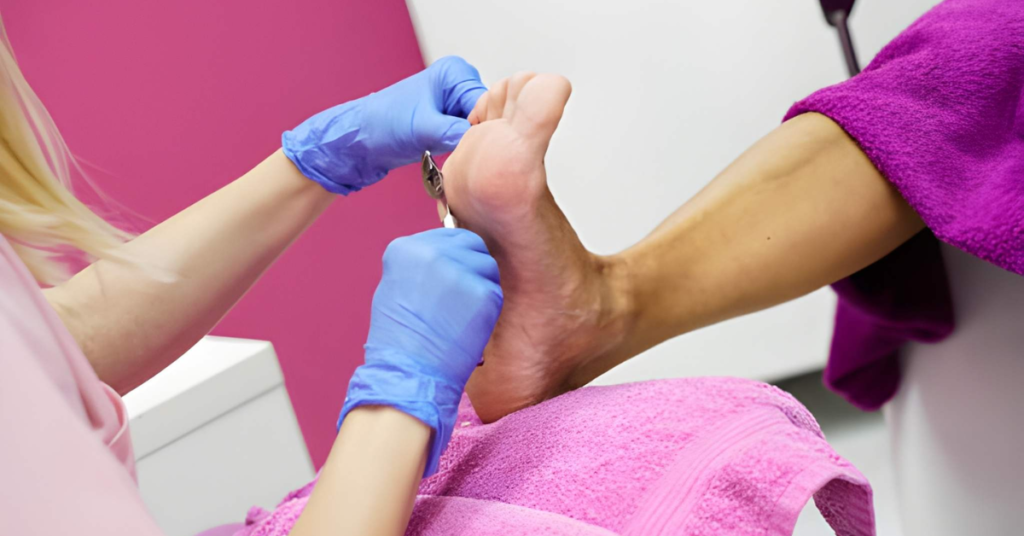
How Routine Foot Care for Seniors Helps Prevent Falls
Routine foot care for seniors supports fall prevention by:
- Preserving sensation in the feet
- Reducing pain that alters gait
- Encouraging even weight distribution
- Supporting confident movement
It also allows early detection of skin breakdown, infections, or nerve changes that could affect balance if left untreated.
Simple Foot Care Habits That Support Stability
Daily foot care routines can make a meaningful difference:
- Check feet daily for skin or nail changes
- Keep nails trimmed and smooth
- Moisturize dry skin to prevent cracks
- Wear supportive shoes with good traction
- Seek professional care when self-care becomes difficult
These habits help seniors stay mobile and independent.
When Professional Foot Care Is Especially Helpful
Professional routine foot care for seniors is strongly recommended for those who:
- Have diabetes or circulation concerns
- Experience numbness or tingling
- Have difficulty seeing or reaching their feet
- Have a history of falls or balance issues
At Sole Foot and Ankle in Valparaiso, Indiana, our team focuses on comfort, safety, and prevention with every visit.
A Note from Sole Foot and Ankle
Falls are not an inevitable part of aging. In many cases, improving foot health can improve balance and confidence. Routine foot care for seniors is one of the most practical steps toward staying active and steady.
If you or a loved one are experiencing balance concerns, foot discomfort, or difficulty with nail or callus care, a podiatrist can help.
FAQs for Seniors and Caregivers
How often should seniors receive routine foot care?
Most seniors benefit from visits every 6 to 8 weeks, depending on nail growth, skin condition, and comfort.
Can foot problems really increase fall risk?
Yes. Pain, thick calluses, and nail issues can change how someone walks and reduce sensation, making falls more likely.
Is routine foot care for seniors safe for people with diabetes?
Yes. Professional care is often recommended to reduce the risk of skin injuries and infections.
What signs suggest foot issues may be affecting balance?
Watch for shuffling, uneven steps, hesitating before walking, or avoiding certain surfaces.
Can caregivers help with foot care at home?
Caregivers can assist with daily checks and hygiene. Nail trimming or callus care should be handled by a professional if flexibility, vision, or circulation is limited.